

The Human Experience · Episode
Episode 48 – Christian De Quincey Ph.D
A conversation with Christian De Quincey Ph.D
Christian de Quincey, Ph.D., is a philosopher and author who teaches consciousness, spirituality and cosmology at universities and colleges in the United States and Europe. He is also an international speaker on consciousness Christian De Quincey is a professor of Philosophy and Consciousness Studies at John F.
Stay with the full conversation.
Episode field notes
Show notes
Christian de Quincey, Ph.D., is a philosopher and author who teaches consciousness, spirituality and cosmology at universities and colleges in the United States and Europe. He is also an international speaker on consciousness
Christian De Quincey is a professor of Philosophy and Consciousness Studies at John F. Kennedy University, Dean of Consciousness Studies and the Arthur M. Young Professor of Philosophy at the University of Philosophical Research, and adjunct faculty at the Holmes Institute, and at Schumacher College, Devon, England. He is founder of The Wisdom Academy that offers personal mentoring in consciousness studies (combining the “four Gifts of Knowing: The Scientist’s Gift of the senses and experimental method; The Philosopher’s Gift of reason and language; The Shaman’s Gift of participatory feeling and alternative states of consciousness; The Mystic’s Gift of transcendental intuition accessed in sacred silence”[1]). His writings on consciousness have appeared in a number of academic journals and popular magazines.


His books include Radical Nature: The Soul of Matter (Park Street Press, 2010), Radical Knowing: Understanding
Consciousness through Relationship (Park Street Press, 2005), Deep Spirit: Cracking the Noetic Code, a novel of visionary science and spirituality (Wisdom Academy Press, 2008), and Consciousness from Zombies to Angels: The Shadow and the Light of Knowing Who You Are (Park Street Press January 2009). His “Radical Consciousness” trilogy focuses on the nature of reality, the nature of consciousness and knowledge, and (in Radical Science: Exploring the Final Frontier of Consciousness [forthcoming]) he explores the transformations needed for a true science of consciousness. With Willis Harman, he co-authored The Scientific Exploration of Consciousness (Institute of Noetic Sciences, 1996).
He has worked in marketing and public relations, and as a journalist for various newspapers and magazines. De Quincey was formerly managing editor on Shift magazine (IONS Review), from the Institute of Noetic Sciences.
He served as adjunct faculty on the University of Arizona’s pioneering on-line degree course in consciousness studies, and as a member of advisory committee for the University of Arizona’s Center for Consciousness Studies.
De Quincey earned his PhD in Philosophy and Religion from the California Institute of Integral Studies, and a master’s degree in Consciousness Studies from John F. Kennedy University.
In this episode we spoke to Christian about the nature of consciousness, reality, how we think and perceive and how those perceptions can impact our experiences and the relationships in our lives.
Editorial Reviews
“BlindSpots is a delightful book to read. It will make you think about ideas you secretly hunger to discuss deeply. Every chapter is bound to get you into a rich dialogue, if not with others, then at least within yourself. Read this book and you will go deep.” (Amit Goswami, Ph.D, author of Quantum Creativity and Quantum Economics)
“In BlindSpots, Christian de Quincey pulls back the veil on the thoughtless, delusional ways we too often communicate. It’s not just that these shortcuts are wrong, they are also dangerous because they lead to behaviors and beliefs that our fragile species can no longer afford. This very wise, engaging book should be at the top of the reading list of everyone who is concerned about our future.” (Larry Dossey, M.D., author of One Mind: How Our Individual Mind Is Part of a Greater Consciousness a)
“In this book, Christian de Quincey illuminates some of the biggest blindspots that keep people stuck. Be prepared to be challenged about ideas you probably take for granted. Be prepared to be amused and inspired.” (Marilyn Schlitz, Ph.D., president emeritus/senior fellow at the Institute of Noetic Sciences)
“This important book by Christian de Quincey shows that by questioning our own assumptions more carefully we can arrive at a deeper and more accurate understanding of life’s complexities. De Quincey brings vitality and excitement to scientific, philosophical, metaphysical, and spiritual issues. I recommend this book for almost everyone.” (Jeffrey Mishlove, Ph.D., dean of transformational psychology, University of Philosophical Research)
“BlindSpots will make your brain hurt, but in a good way, like the aftereffects of exercise. De Quincey deftly unpacks 21 ideas that are often taken for granted to reveal why ‘deep thought’ philosophy remains a vital approach to understanding our complex world. You may agree with some of the ideas and disagree with others, but in all cases you will be invited to reconsider your core assumptions.” (Dean Radin, Ph.D., chief scientist at the Institute of Noetic Sciences and coeditor in chief of Expl)
“In his new book, Christian de Quincey focuses our attention on the ways in which erroneous or flabby or incoherent thoughts have become embedded in our everyday clichés. It is a delight to reflect upon these invisible clunkers in a critical way, and even if one ends up disagreeing with de Quincey, the end result is an improvement in one’s verbal expressions; one’s language feels brighter, fresher, and more alive.” (Brian Thomas Swimme, Ph.D., author of The Universe Is a Green Dragon and Canticle to the Cosmos)
“. . . this book will help you think more clearly and converse more fruitfully on a wide range of subjects. BlindSpots is an excellent field guide for exploring some of the twenty-first century’s most challenging conceptual terrain.” (Michael Dowd, author of Thank God for Evolution)
“Professor de Quincey has a jeweler’s eye for questions concerning the nature of consciousness and its position in the world of nature. I always find his clear thinking and writing a pleasure to read.” (Allan Combs, Ph.D., director of consciousness studies at the California Institute of Integral Studie)
“Reading de Quincey’s BlindSpots is a profoundly liberating experience. All of us absorb beliefs from the culture around us, and we limit ourselves by acting as if those beliefs are true. De Quincey subjects those ideas to his brilliant philosophical critique. We are left with our minds open, free to engage with the world in new and interesting ways. This is my favorite kind of philosophy–philosophy that frees us from limitations and opens us more richly to our participation in the universe!” (Eric Weiss, Ph.D., author of The Long Trajectory)
“A provocative book that challenges many popular assertions about consciousness and the nature of reality. De Quincey encourages us to think for ourselves and base our beliefs on our own experience rather than hearsay or others’ opinions. Much food for thought in here for everyone.” (Peter Russell, author of The Global Brain and From Science to God)
Find Christian Here: http://www.christiandequincey.com/
This episode of HXP is brought to you by Find Mindfulness:

Read the conversation
Transcript
welcome to the human experience podcast the only podcast designed to fuse your left and right brain hemispheres and feed it the most entertaining and mentally engaging topics on the planet as we approach our scent please make sure your frontal temporal and occipital loads are in their full upright position as you take your seat of consciousness relax your senses and allow us to take you on a journey we are the intimate
strangers thank you for listening this episode of the human experience podcast is brought to you by fine mindfulness mindfulness these days is huge mass media is starting to understand the benefits of taking time to pause and reflect have you ever been interested in mindfulness and meditation have you ever wanted to create a practice but you just fall off track well this is where fine mindfulness comes in they offer a
community that will help you create those powerful lasting habits that keep you training your mind whether you are the CEO of a fortune 500 company or a college student running a startup fine mindfulness can help you find mindfulness is a 30-day program how often are you looking at your cell phone just ask yourself how often you look at your cell phone and then tell yourself that you need to take this course mention the human experience go and sign
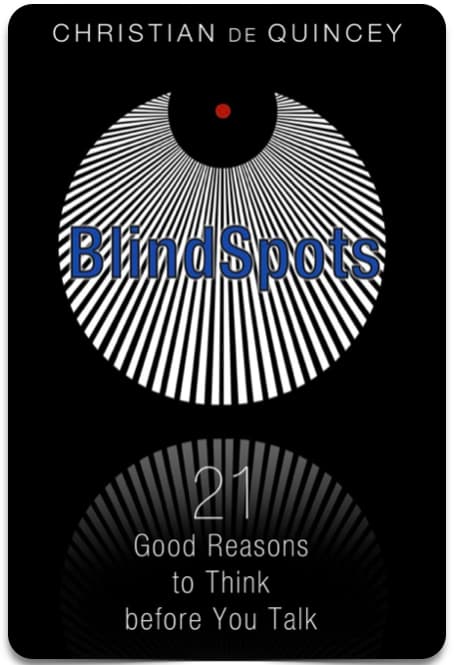
up right now at WWF find mindfulness calm what’s up folks this is our episode with christian de quincey in it we discussed consciousness and his book blind spots 21 good reasons to think before you talk and yeah it was an interesting read it was actually quite challenging to get through just because I usually move through books pretty fast with this one I it took me some time I had to process what I was reading just because it
really does challenge your paradigms and the things that you’ve been told through New Age movements and so I really think you guys will enjoy this episode it is a little highbrow and perhaps I wasn’t we’re asking the right questions and nonetheless it’s a good interview the call did drop a few times it did make it a little bit difficult to sustain a sort of flow within the conversation all in all good interview good episode please
make sure you check us out on youtube facebook twitter at the human XP please become a member five bucks a month the price of a cup of coffee it will help us sustain our server costs I would really appreciate it thank you guys so much for listening the human experience is deconstructing consciousness as we speak to my guests Christian De Quincey Christian my good sir welcome to hxp thanks it’s good to be here I’m very much looking forward to
our conversation so Christian I mean you’re you’re a professor of philosophy and consciousness studies you graduated at John F Kennedy University you’re the Dean of consciousness studies at of philosophical research you’re an award-winning author you founded the wisdom Academy you seem to have an unlocked a hero level achievement in the consciousness field what sparked this interest for you and what about consciousness fascinates you so much
okay so well the the story goes back a long way it’s actually something I have written about in one of my my other books radical knowing where i talk about when i was a child of about seven or eight years living in Ireland and it was a rainy day and I had nothing to do so I picked up my old my father’s old tattered encyclopedia and started reading through it and came across a drawing of a dinosaur that was associated with an entry an article on
evolution so I started reading and there was a lot I didn’t understand but I understood enough to be surprised that not only did I come from my parents but and they from their grandparents and all the way back to the beginnings of humanity but that humans themselves evolved from some prior ape-like ancestors that came from other mammals that came from reptiles that came from amphibians that came from fish and all the way back through Jellyfish to what
that old encyclopedia called infusoria single celled critters that we would call protozoa are back Syria so I was astounded at that early age to realize that my earliest ancestors were bacteria but even more than that I wondered well between bacteria and me sitting here in my parents room in Ireland between bacteria and humans where did this ability to wonder consciousness to be able to think where did that first arise in the great
unfolding of evolution mm-hmm and so I looked at my dog and I was pretty sure well I’m sure dogs have it in the cat and yes I was sure that she had it too so i looked at the goldfish and after a few moments of hesitation decided that yes even go fish even fish have consciousness and then i wondered about the worms out in the back garden whether they had this ability to wonder to think to be conscious and i couldn’t decide
one way or the other so somewhere between fish and worms i figure that consciousness had come into being but exactly where the encyclopedia didn’t answer that question and that question of where in the great unfolding of evolution did consciousness first arise but stayed with me in the background and then in my late teens and early 20s I started reading up to see if I could find an answer to that question and I started by studying evolutionary biology
and after a while I realized that there’s no way that biology is going to be able to answer a question about consciousness so then I shifted over to psychology and although I found it fascinating reading about perception and other psychological phenomena I realized after a while that that actually the science of psychology had nothing to say about consciousness it back in those days and still to some extent today it was dominated by behaviorism which had
no room for mind or consciousness so then I thought well it’s really a philosophical as a question about the nature of the relationship between consciousness and the physical world and so I then dived into philosophy but and particularly philosophy of mind which was the discipline that addressed this question but I soon came to realize that there are two English languages there’s the English that we all speak and then lose
the English that philosophers speakin and I just had real difficulty back then decoding the language of philosophy Western academic philosophy and so then I turn my attention to Eastern philosophies to Buddhism Hinduism Dowson in particular and was delighted to find a wealth of information that was focused on consciousness ring but it had nothing to say about evolution and so my question still remained unanswered and
so in desperation I turned back to Western academic philosophy of mind this time really determined to crack the code and and I did and along the way I rediscovered the work of the my favorite philosopher the British metaphysician Alfred North Whitehead and and found that the answer to my question was nowhere that consciousness didn’t arise anywhere in the great unfolding of evolution for the simple fact that it was always present that consciousness
always existed wherever there was matter there is some are energy there’s some form of consciousness and so I then became enthralled with the philosophical position of pants psychos in which states that all matter is intrinsically sentient and that consciousness goes all the way down it was there not only in the fish and the worms that in the cells of the fish in any animal in the molecules of those cells in the in the
atoms and the subatomic particles in the quark or quanta or whatever lives of the fundamental basis of physical reality there is some degree some trace of consciousness that did an ability to feel to be aware to make choices exists at that level so you’re connecting the atoms that are floating around and matter and and then you’re moving towards human relationships I mean I I found your book challenging to read actually I usually
can finish a book in a couple days I found myself you know I started reading this book last week and I found myself reading a few pages and scribbling a bunch of lines taking notes I would I would read a few pages and then kind of put it down and I would have to absorb what you said and I found I found the back of what it says on your book quite hilarious i’m just going to read that we live in a world filled with cliches
convenient assumptions and unquestioned conclusions that many of us use without giving them a second thought we all spread these thought viruses infecting everyone we come in contact with but many of these blind spots and how we think about ourselves and the world do not withstand rigorous scrutiny or even casual scrutiny in some cases yet they fall out of the mouths of scientists religious teachers journalists and authors with dumbfounding frequency wow
that’s quite a statement so I was challenging many of the basic assumptions that we find in modern science and philosophy that most scientists and philosophers that I’m aware of just take for granted and so it’s it’s understandable that if you know the experts so to speak take these ideas for granted without much questioning that the general public the lay audience is likely to also take them for granted and so by challenging these
deeply ingrained assumptions can take time can’t can be people need to take have a double take to find out exactly what I’m saying and and why why people don’t notice the the absurdities of many of the positions that are taken for granted and if you like and if we have time we can go into I’m gonna love logging into them I don’t have time to go to old it of course all right I mean let’s get into the very first one that you mentioned that we I
think it’s the first one that we create our own reality and I mean I I found I found what you said intriguing that we in fact don’t create reality we color our thoughts color reality the color we color the way that we perceive reality can you can you detail that can you get into that for us please yeah I I sure can and by the way that wasn’t the first blind spot in the book we can come back to the first one if you like it was
everything came from nothing and you know in the Big Bang and that’s that’s there it opens with that for it for specific reason but the question the you ask I think occurs very early on that we create our own reality well there are a couple of problems with that first of all if it were true that each of us creates our own reality then how could we ever communicate if you lived in your created self-created reality and I lived
in my self created reality what would be the common link that would enable us to communicate and clearly we live in realities that overlap because right now you and I are communicating so we obviously don’t live in our own separate self created realities we live in a shared reality so that’s the first thing it’s we don’t exist on our own reality but the second point is is that we certainly don’t create its reality because we as a species have been around
for what couple of million years give or take free and clearly reality has existed for a long time even this universe has been around for about 14 billion years before we came on the scene yeah the clearly reality does not depend on human consciousness or human intention for a reality to exist so it’s the other way around it’s not that we create reality reality created us so neither do we create our own reality nor do we create any reality through our
thoughts and and that’s the third aspect of that blind spot is that actually thoughts don’t create anything except perhaps trouble thoughts and beliefs are just abstraction that under like frozen snapshots of experience experience happens naturally and automatically from moment to moment to moment and what if thought is it’s like freeze framing one of those moments and then putting it to one side but meanwhile experiences keep
happening and so the the the thought that we had one moment is out of date by the time the next moment of experience arises and so on our thoughts and beliefs are made of thoughts of many of these abstractions all our thoughts relate to some time in the past some moment ago not to the current moment of reality and one thing that I often talk about with my students is I asked the question when does consciousness or experience happen and everybody says
right now and then I say when does reality happen well again reality happens right now in the present moment so experience in reality coincide therefore the optimum way to know reality to know what was actually going on what is actually happening is to pay attention to our embodied experience in the moment not to the thoughts and beliefs we have about reality because they refer to a reality that no longer exists it’s in the past it may be just a
few moments ago are indeed it might be way back in our childhood or indeed in some prior lifetime this notion that we create our own reality has become incredibly popular it’s it’s very it’s very mainstream in New Age movements I mean such as the secret a lot of people are pitching this idea so I mean so then how does this work I mean are we cut do we have our own little bubbles that we kind of interpret information with and
then you know as I speak to you those sort of bubbles kind of coalesce and and we exchanged information that way yeah well I think I think the reason that people have these very different ideas for example the idea that we create our own reality as I show in this book blind spots that cannot be true the reason that such clichés and blind spots like that persist is because people don’t actually take the time to think through
the assumptions that they hold and they just take for granted and so what this book is about in the subtitle I mentioned is 21 good reasons to think before we talk so people actually don’t stop to think they just accept these ideas without question and so what this book is doing is stopping and asking and encouraging inviting people to think a little bit deeper and to show them that actually these 21 cliches really don’t
make any sense once once we decide to look at them more closely they just don’t withstand close scrutiny so yes a lot of people have the idea and really cling to the idea that we create our own reality but as I pointed out is that cannot be the case because if that were the case we could never communicate and clearly reality isn’t something that we creates it’s the other way around reality creates us because it has existed long before we even evolved into
into the a if consciousness is subjective and the process of life is objective then how I mean how does how do we connect this together how do we use this in relationships if you’re married how is my consciousness affecting the consciousness of another person well boy you’ve packed in a lot of topics there with lots of at least implicit questions but you began by asking how is the objective process of life related to the subjective process
of consciousness ring so we can pick that up and then come back to the topic of relationships sure um in as I mentioned earlier that the the world view that seems to me to make the most sense to account for the fact that matter exists bodies exist and consciousness exists we know that to be the case but the the the philosophy that best accounts for the existence of both of those and their relationship is Pam psychosom the idea that matter our
energy is intrinsically sentient so every object is also a subject there’s no separation between them it doesn’t mean they are identical and that’s another blind spot that is very very prevalent is that people hear that something that two things like consciousness and an embodiment might be different might be distinct and they assume that therefore they are separate but distinction is not the same as separateness so just because two
realities are distinct consciousness and embodiment or mind and matter doesn’t mean they are separate now they always go together and so wherever you have that maybe this is then the major point that you need to get to be able to it’s kind of like maybe the code to so much would be the alternative positions that I’m presenting in this book okay if you don’t get this the rest probably will keep seemed very strange to you is that
we have to give up the idea that either the basic reality is matter which is called materialism and that some how in a way that’s inexplicable mind or consciousness emerged or evolved from pure objective matter that’s just a non-starter philosophically the other idea is idealism that’s common and Mary many spiritual traditions particularly Eastern spiritual traditions is the reverse idea is the idea that mind or consciousness or spirit is the ultimate
reality and that what we call matter is either an illusion it doesn’t really exist or else it is something that emanated from pure consciousness from pure spirit but that’s exactly the same inexplicable problem faced by materialism except in Reverse there’s no way to account rationally logically account for the fact that something purely subjective could ever produce anything objective that pure spirit our consciousness could ever produce real
matter so materialism is problematic I dealers in this problematic in terms of being able to explain the relationship between these two realities mind and matter okay and then the third view is dualism it takes the view that both mind and matter do actually exist but that the existence separate domains at least acknowledge the reality of one and says that you can’t reduce either matter to mind our minds to matter but that they exist in
separate domains now the problem with dualism is that if mind and matter consciousness and energy exist in different domains then how come they could ever interact and nobody can even begin to explain how that could happen so we have deep problems philosophically with materialism that says that only matter is ultimately real with idealism that says only kind mind or consciousness is ultimately real and with dualism that says both matter and
mind are real but they exist separately in separate domains all of those views are deeply problematic the only view that seems to account for the reality and the existence and relationship between matter and mind between consciousness and energy is the view called Pam psychosom the idea that matter energy are intrinsically sentient that subjectivity is inherent in objectivity there is no separation between the two and so therefore as life
to go back to your question what’s the relationship between the objective processes of living systems of evolution and the subjective reality of consciousness is that consciousness has always been active in evolution it’s oh it’s right from the very start there has been awareness of possibilities and an ability to make choices among those possibilities and those have those aspects of reality have accounted for the progress of evolution being aware of
alternative possibilities and then making choices that is what counts for evolution so we can conceive of evolution as the grand adventure of matter-energy exploring its own potentials consciousness is part of the process of evolution it’s not something that emerged from evolution it’s always been inherent within evolution guiding its unfolding hmm yeah yeah that really makes sense and I mean you taught you talked about the sort of energy and you
talk about how the this subtle energy is also sentient and that consciousness doesn’t create this sort of subtle energy can you get into that a bit please south of energy is still a form of energy and therefore it’s something that spreads out in in space and subtle space but mine or consciousness is not spatial it doesn’t have any extension it doesn’t have any volume it doesn’t exist in space at all nine location it’s it’s
not even on location it’s none located it doesn’t have any existence on space whatsoever and so so subtle energy is not the same as consciousness just as regular physical energy has consciousness built into it it’s intrinsically sentient so is subtle energy intrinsically sentient as well is that all energy whether it’s subtle energy or gross physical energy comes with the ability to feel to be aware and to make choices and it’s that ability to
feel to be aware and to make choices that’s what consciousness is I have a bumper sticker that some sums up the relationship between consciousness and and energy and it applies to whether it’s physical energy or a subtle energy and the bumper sticker is simply this consciousness knows energy flows so when that means as consciousness is the ability to know to be aware to feel the existence of anything energy is what flows through existence of what is what
flows through space what consciousness is not some one of those objects flowing through space that’s a common blind-spot common to both New Agers and to materialist philosophers is that they tend to think of consciousnesses as an object and try to apply the tools and ideas of objectivity to something that just doesn’t have that kind of reality it is subjective when when I’m having a deep profound conversation with someone
and and I feel like I’m connecting with them and you know the phrase is usually I connected with them on on such a high level I mean and I and I feel something happening there and at maybe I mean you say that energy doesn’t transmit I mean there’s nothing being transmitted between me and this person as we speak not actually that’s not quite what I said I’m saying that in in that kind of essentially telepathic connection there
is no energy being transmitted that accounts for the telepathic connection Sony right now are you and I are having this conversation and we are connecting we are understanding each other at least two to some degree but we effectively communicating we’re connecting now in the we’re speaking words and the words are traveling through cyberspace through them through the process of electrons moving through space and and those are
carrying the energy you know whether or not if we were sitting opposite each other in a room then it wouldn’t be the energy wouldn’t be transmitted through electrons it would be transmitted through vibrations in the air that’s it that’s an exchange of energy and that certainly happens when people communicate there is a physical connection an exchange of energy but that doesn’t account for the reception of meaning so right now to some extend
you and I are understanding each other because we’re grasping the meaning that the other person is communicating that’s not contained in the air vibrations are in the electrons meaning is something subjective it doesn’t exist in the objective physical world so something else is happening besides the exchange of physical energy where there is air vibrations or electrons that accounts of the fact that you and I share a meaning
we understand the meaning that the other is communicate that is a consciousness to consciousness a mind to mind a telepathic communication and there’s nothing no energies transferred in that communication so yes we are speaking so for example two lovers may be sitting together and one says to the other I love you now they hear it because that’s a be the the sound in the room that the air in the room is vibrating that’s
creating the sound so there’s a physical process taking place and so the other person hears the words but more than likely what really matters is not the fact that they hear the words I love you what they’re really interested in is the the sincerity the authenticity the meaning does that person really mean what he or she says that is not carried in the air vibrations there’s no way to analyze or explore the vibrations of the
air are the electrons to see if that person is really being sincere and authentic that’s something that occurs in in consciousness in the mind and that’s subjective it’s not something that occurs in space there is no instrument that could ever detect whether or not somebody has been sincere are authentic that’s so we do connect telepathically but the telepathic connection is not something that involves the exchange of energy through
space so we connect in two ways we connect energetically through exchanges of energy that happens all the time that’s a physical process and one something objective connecting with an exchanging energy with something else that’s objective but we also connect inter subjectively through sharing of meaning and that’s something that doesn’t occur in space and doesn’t require any special connection at all I mean would you say that that everything
is connected yes I would yeah in fact I even have a chapter in the book blind spots on that you know some years ago I had this aha moment like a lot of people either have these aha Eureka moments in the shower or while I’m driving and this particular one happened one day while I was taking a shower I was thinking about the this idea that everything is connected and it suddenly struck me well of course everything is connected it couldn’t be
any other way than that think of it this way so if if you are iron not connected or if two things are not connected it means that there is something between them that separating them but if for something between us that’s separating us then whatever is between us is also connecting us if there is nothing between us then there’s nothing separating us so either way we are always connected there is no way for any two items in reality to ever be
unconnected they always connected in some way because if there was anything between them then whatever is between them connects them and if there was nothing between them then they would be connected anyway so the idea that everything is connected to me is kind of ho-hum it’s like d’oeuvre yes of course because there is really no other option they’re really important and intriguing question to me is not whether everything
is connected or not clearly everything is connected to everything else the really interesting question is what is the nature of connection and we connect in two ways we connect we connect physically through exchanges of energy and we also connect non-physically through sharing of meaning in consciousness and the sharing of needing and consciousness is not something that can be explained in the exchanges of energy so again to go back to the
example of two lovers communicating they say to each other I love you well there’s a connection physically through the words being spoken than the air vibrations that set up a chain reaction that ultimately gets processed in the brain but none of that contains meaning meaning is something that occurs in consciousness and so we connect through shared meaning which has nothing to do with the exchanges of energy through space hmm I mean I found find
all this incredibly profound and it connects it does connect with me when you put it the way you do and I remember the chapter in your book that was kind of a softball for you I mean you also mentioned that we we aren’t alone we are not isolated individuals that come together to form relationships and I’d love to hear your perspective on that as well well yeah this comes back to a good point that you were raising earlier
about you know how do people communicate in in one of my other books radical knowing that the theme of that book is intersubjectivity and essentially in that book I the subtitle is exploring consciousness through relationship so we can explore consciousness in in three ways from what’s called the third person perspective which is what neuroscience does it explores the structure of the brain and the nervous system and that
gives us the objective correlates of mind or consciousness it doesn’t tell us anything about consciousness per se but it tells us how the brain operates when when events are going on in the mind of consciousness so that’s one way neuroscience is the third person perspective the the other one is the first person perspective which is to which is what people do in meditation and contemplation where we take the time to go deeply into our own subjectivity
and to pay attention to what’s happening in that and those are really the two standard modes that and that people use for exploring consciousness and for a long time the first person perspective proponents would say that everything that the third person the materialists are doing is missing the mark and the only true way to explore consciousness is through first-person contemplation 4s person investigation in in radical
knowing i point out there is a third way and that’s the second person perspective which is through intersubjectivity so rather than just looking into our own subjective private awareness we can pay attention to what happens when we are connecting with others in relationship that is intersubjectivity that my subjectivity is in a co-creative relationship with your subjectivity that actually we are co-creating each other at every moment
that that Mike my consciousness is not only influencing your consciousness but it is literally co-creating your consciousness that part of who you are is created by part of who I am and vice versa that all sentient beings in the universe are contributing to the being to the existence of all other sentient beings in the universe the Buddhist tradition is deeply aware of this and refers through is codependent co origination that everything arises
because of its relationships with everything else so in that sense consciousness the deepest nature of consciousness is not our individual subjective minds of consciousness that that is that that is real there is a reality to our individuality but the deepest nature of who we are is not individuals the deepest nature is the word I coin in that book is is inter viduals tick not only the Buddhist sage refers to as inter being the deepest
nature of reality is relationship and then out of this matrix a web of relationships you can picture it like an ocean these waves of individuality arise out of the ocean of intersubjectivity out of the ocean of relationship and they exist for the length of our eighteen nineteen hundred years and then they dissolve they return back into the ocean of intersubjectivity so individuality is not the primary reality of our existence it is real
it is secondary our deepest nature our deepest reality is the connections the relationships the intersubjectivity out of which are individually arises our individuality arises Wow I mean so would you say that this is a process of evolution or is this intelligent design yes I I point out that in in in blast spots that be the dilemma are the dichotomy of the confrontation between the intelligent designers the creationists and the standard view of
evolution they’re not the only two options in fact both of them are in some ways accurate and and both of them are in some ways wrong it’s not that there is no intelligence and evolution again from the perspective of pants I cotton since all matter old energy is intrinsically sentient has its own subjectivity has its own awareness as its own ability to make choices there right from the very start evolution not just here on earth but cosmic evolution
has involved consciousness directing the unfolding the flowing of energy through through the universe so there is an intelligence active within evolution but this is not a supernatural intelligence as the intelligent designers and the creationists assume it’s not like there’s some God out there above transcendent to reality to the universe no the the creative aspect of the universe is inherent its intrinsic to the universe itself that matter energy
is intrinsically creative is intrinsically sentient is able to make choices and that it is guiding its own unfolding and that the process of evolution is the consciousness within matter guiding the unfolding of matter into these more and more complex forms so from single cells to the multicellular beings we recognize as humans and elephants and dolphins and dogs and cats and so on so I mean how do we tie all this I mean how do we tie
this together I mean we have sentience conscious ness and this this energy I mean how there there is the sense of for example when when I start to think of a place or when I start to focus my consciousness onto a certain thing that thing if I think about a white honda I will start seeing white Honda’s everywhere why does something like that happen well it’s certainly not because you’re creating those white Harmon hunters because
you’re thinking of them that’s that’s pretty clear you’re seeing them because you’ve now programmed your attention to be more attentive to the observation of white Honda’s I mean that’s a classical psychological phenomenon but it’s got nothing to do with creation if that’s what you were thinking or implying no me why is why is our sentience so important okay so let me just get back and make an important point is that we were asking
about why why would the cosmos consider human consciousness to be more significant than say the consciousness of some other creatures I mentioned your ass but we could also talk about whales or elephants whales and elephants can communicate over really long distances without the benefit of developing artificial technologies that humans do that and that we require to communicate over these immense distances whales can
do that without creating technologies that in the process of creation negatively affect the environment and at pollute the environment and lead to the current major crisis in our world today of global warming and climate change so and of course that’s not just apply to communications technology its applied to all industrial types of technology in general whales and dolphins and elephants and and other intelligent creatures don’t need to mess up their
environment in order to communicate long distances the human species does at least thinks it does and has done so it’s very easy to imagine some cosmic greater intelligence looking at our planet and thinking the most intelligent species there are the ones that don’t mess up their environment and since humans have brought the environment to the point of near collapse that may not only destroy ourselves but all other species along
with us that doesn’t strike me as the height of intelligence and certainly from a cosmic perspective be very easy to think that that be that the cosmic Lords would decide that the whales and the Dolphins and the elephants were far more intelligent than humans human beings aren’t special as many say in your book that’s one of the the major blind spots in fact I often refer to it as the the mother of all blind spots the
idea that humans are special it’s something that you applied implied a moment ago that because we have the ability to create technologies and civilizations art and science and philosophy and religions yes we have that ability and and in some ways that makes us stand out from other species but the point to realize is that every species by definition has something special that distinguishes it from other species otherwise it wouldn’t be a
distinct species so yes humans can do things that other species can’t do but they can do things that we can’t do dolphins and bats for example communicate through echolocation we can’t do that without developing technologies to augment our natural senses so every species is different from every other species and every species is unique and in that sense every species is special and we need to give up the idea that for something
especially special about human specialness that’s the that’s the hubris that’s the problem that lies are they at the foundation of the current ecological crisis we have is that somehow or other it is assumed that because humans are special that we have a right not only the might but also the right to exploit the natural environment to suit our own desires in needs and grieves but the consequences of that view are not very pretty and are
likely to lead to our own demise as well as the demise of many other species so we have to give up the idea that humans are special are if it’s important to you or anybody else to cling onto the idea that there is something special about humans then you need to recognize that there’s also something special about every species that’s what makes it a species and then to follow that up with the acknowledgment that there is nothing
especially special about human specialness that’s the point so in that sense humans are not special because every species is special and one of the one of the questions that I had while I was reading your book and I think you answered it near the end but in free will I mean how does that work into all of this well that is in some ways the 64 trillion dollar question does Free Will exists and I think the answer to that is
yes and no that to a great extent we as organisms as human organisms are like every other organism is it’s true that yes we are determined to a great extent by our past and that’s what the scientific establishment likes to persuade us is the is the case entirely but it’s while yes it is true that we are determined to a large extent by the laws of physics by genetics by biology none of that accounts for the fact of consciousness and consciousness comes
with the ability to be aware of possibilities and to then make choices among those possibilities and that’s where creativity comes into being and that’s where free will come them so we in addition to being determined to a great extent in a sufficiently clear state of awareness we can be aware of the possibilities present to us and then choose among those possibilities something new that didn’t exist before and so we are not fully chained to the
past through determinism yes to a large extent a lot of what we do is determine and a lot events very useful we don’t have to be aware of breathing and the beating of our heart for example although that happens deterministically but we do have the ability to interrupt the process of determinism so for example right now you and I well they are breathing is happening naturally and automatically we can choose to interrupt
that process and stop breathing for a moment or two and people who have greater psychophysical awareness can also do things like stopping their heart beating for a moment many Yogi’s can do quite amazing things with their my body connection so we can use choice and consciousness to interrupt the flow of determinism and that’s the point that gets overlooked inevitably within the scientific worldview because the scientific worldview doesn’t recognize
that consciousness and choice are intrinsic to reality they see consciousness of something that emerges miraculously of course from the complexity of matter um and that’s one of the again one of the blind spots that I address in this book is that the idea that brains produce consciousness is a non-starter that you’re never going to get physical you’re never going to get non-physical mind or consciousness from purely physical ingredients like brain
cells and nervous systems I mean would you see this is sort of some sort of computer simulated environment that we’re in no I would not why not because we can we can have the experience of our embodiment and we can also have the experience of our consciousness and the the embodiment is something that can move through space that again it comes back to one of the views of of idealism I said there were two versions of idealism there’s the view
that says we’re both you say that only consciousness exists and then one view says that matter energy is just an illusion and the other says no matter energy is real that is something that emanates from pure object F pure subjective mind or consciousness but you’re never going to get anything truly material are truly objective from surely subjective ingredients that’s a non-starter that’s just not going to work out and then the other idea is the
idea well that matter energy is just an illusion but people who make that claim and I’ve met many of them literally just don’t live in the world in a way consistent with that claim they wear clothes they eat food they drink liquids they avoid cars in the freeway and so on and so on so everybody who claims it matter is an illusion actually lives in the world as though matter is very real and they’ve got no other option if you
want to live and stay saying you have to treat the physical world is real the physical world stubbornly insists on its own reality if you try to live any other way you will quickly become very bruised or workers they will die so people have to acknowledge the physical world is real there’s just no other option it’s not even something that they can choose to do they might make the claim that Matt that matter is just an illusion but
they will always act and behave and perform in the world as though matter is real everybody without exception that I know who claims that matter is an illusion doesn’t treat matter as an illusion and I bet the same is true in your experience that you don’t know of anyone who claims that matter is an illusion who actually lives in a way consistent with that plane now philosophers call that a performative contradiction that somebody makes a
claim that their action their behavior their performance contradicts what they claim to be the case so in people claim that matter is just an illusion they actually don’t live in the world in a way consistent with that claim it’s a performative contradiction now is that there’s no way to logically refute that that’s one of the strengths of that form of idealism because there’s no way to step outside the mind to know anything about any extra mental reality
because everything we know about the physical world we know out can only know through consciousness one of the strengths of idealism is that it is logically irrefutable because there’s no way to step outside consciousness to know anything about the physical world because everything we know about the physical world the material world we know as something that shows up in consciousness so all knowledge necessarily occurs in the mind occurs in
consciousness so everything we know about the physical world including the existence of the material physical world is an event that occurs in consciousness so that’s a pretty strong position to take and it’s logically irrefutable but the people who claim that therefore matter is just an illusion because everything we know about the physical material world is something that occurs in consciousness engage in a performative contradiction while it’s
logically irrefutable it is pragmatical irrefutable it’s pragmatically problematic because people actually don’t live in the world in a way consistent with the claim that matter is just an illusion everybody who makes that claim treats matter as though it’s real because they have no other choice to if they want to stay alive and stay saying yeah fair enough you know Christian I want to I want to wrap up here I mean we’ve covered a lot i
definitely recommend people check out the book for themselves blind spots 21 good reasons to think before you talk I mean is there is there any one last thing that you want to get in here before we close out well we talked we addressed it earlier and I think it probably is something worth emphasizing again that time I refer to the the blind spot the idea that humans are special as the mother of all blind spots I think
anybody with any sense of responsibility for the current situation in the world has to address the problem of climate change and the and the the influence of human actions in producing global warming and climate change and what I do in my work is I trace that back to the the the the assumption the the hubris that humans are special and usually that is defended on two grounds is defended by religious fundamentalists by saying
that we are special because God injected a soul into humans and were the only creatures with souls and therefore with true consciousness with true intelligence then on the scientific side they say that humans are special because we have these special brains with a special neocortex that is responsible for consciousness that if you don’t have a NE a– cortex you don’t have consciousness that’s the scientific view and that’s just as absurd as the
fundamentalist view that says God injected solar consciousness into into humans so both of these views and by the way of course these are religions and Sciences developed by Guess Who by humans and so it’s it’s humans who come up with the rationale for defending the position that humans are special I don’t I’m not aware of any convocation of all the species of the planet getting together and voting yes let’s make the
humans the dominant species in on the planet or in the universe that never happened never will happen no the idea that humans are special is a purely human generated idea it’s a very self-serving ID at least on the face of it in the end it would probably be our self-destruction so we need to give up the idea that humans are special and recognize that we are one species among all the other innumerable species and sentient beings and that there’s nothing
particularly special about human uniqueness our human specialness yeah I love it a Christian where can where can people find your work oh well they can they can go to my website it’s my name Christian De Quincey com just for those who have a blind spot about the letter e de Quincy is spelled de q you I antsy ey a lot of people leave out that me and of course you won’t get through to my website if you don’t use that and Christian is spelt
away there the religion of spell so it’s christian de Quincy calm I’ve got links to my books and two videos and articles from that website they can also connect with the wisdom academy there if they’re interested in mentorships or courses in consciousness studies and of course they can get my books through amazon or in the local bookstore and they can see videos on youtube particularly videos of recent series of videos i did with the
the host of the show thinking aloud are you thinking aloud you’ve Jeffrey mish love so there’s a bunch of videos available on the new thinking aloud channel on YouTube as well so there’s a lot out there I suppose the easiest way to find out the scope of my work is to do a lot of people do is just google my name and that will bring up a lot of links yes sir well I just want to thank you for your time thank you so much for
being here and sharing your thoughts well thank you too and I’m sorry we had such an interrupted communication this is the human experience and we are going to get out of here thank you guys so much for listening
Ideas worth returning to
Quotes
Five substantial excerpts from the published transcript, lightly edited for clarity without changing their meaning.
“Reality does not depend on human intention in order to exist; reality created us, not the reverse. Thoughts and beliefs are abstractions—something like frozen snapshots of experience. They can shape behavior and cause trouble, but they should not be confused with the living process from which they arise.”
From the conversation“The objective processes of life and the subjective reality of consciousness appear different, yet relationships show how inseparable they are. My awareness affects another person through voice, action, attention, and the living body. The philosophical question becomes practical whenever two conscious organisms meet and change one another.”
From the conversation“Materialism struggles to explain how subjective consciousness emerges from matter that is defined as wholly objective. Idealism reverses the problem by treating mind or spirit as fundamental. I argue that neither side alone is sufficient; a complete account must make room for both the interior and exterior aspects of reality.”
From the conversation“Consciousness has participated in evolution from the beginning. Living processes involve awareness of possibilities and some capacity to select among them. In this view, evolution is not merely matter moving blindly; subjectivity and choice are also aspects of the process through which organisms adapt and develop.”
From the conversation“Idealism is logically difficult to escape because every claim about a physical world appears within consciousness. We cannot step outside awareness to compare experience with reality from nowhere. Everything known about matter—including the belief that matter exists independently—is still an event presented to a knowing mind.”
From the conversation
About the guest
Christian De Quincey Ph.D
Christian de Quincey, Ph.D., is a philosopher and author who teaches consciousness, spirituality and cosmology at universities and colleges in the United States and Europe. He is also an international speaker on consciousness

Episode 191 – Marjorie Woollacott – Infinite Awareness – Consciousness Beyond Biology
August 28, 2025

Episode 171 – Surfing Monster Waves, Mastering Fear & Flow State w/ Laird Hamilton
July 6, 2020 · 46:18

EPISODE 199: Dr. David Nichols — Psychedelics, Consciousness & the Chemistry of the Mind
October 20, 2026 · 1:12:11

EPISODE 198: Cindy Gallop — Make Love Not Porn: Rethinking Sex, Consent & Connection
October 13, 2026 · 58:43

HXP SHORTS: #001 – Deconstructing Death: What Happens When We Die?
September 14, 2026 · 11:37
Independent conversations
Help make the next one possible.
Membership sustains ambitious, unhurried interviews and keeps the complete archive open to curious listeners everywhere.
Become a member