
The Human Experience · Episode
Episode 35 – Dr. James Fadiman
A conversation with Dr. James Fadiman
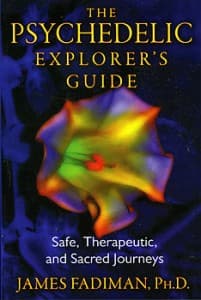
JAMES FADIMAN, Ph.D., did his undergraduate work at Harvard and his graduate work at Stanford, doing research with the Harvard Group, the West Coast Research Group in Menlo Park, and Ken Kesey. He is the author of The Psychedelic Explorer’s Guide.
Stay with the full conversation.
Episode field notes
Show notes
JAMES FADIMAN, Ph.D., did his undergraduate work at Harvard and his graduate work at Stanford, doing research with the Harvard Group, the West Coast Research Group in Menlo Park, and Ken Kesey. He is the author of The Psychedelic Explorer’s Guide.
From the back cover: “The publication of The Psychedelic Explorer’s Guide could not be more timely; it coincides with a major renaissance of interest in psychedelic research worldwide. The information that it provides will thus be useful not only for the hundreds of thousands of people involved in self-experimentation but also for the new generation of psychedelic researchers.”
–Stanislav Grof, M.D., author of LSD: Doorway to the Numinous
Called “America’s wisest and most respected authority on psychedelics and their use,” James Fadiman has been involved with psychedelic research since the 1960s. In this guide to the immediate and long-term effects of psychedelic use for spiritual (high dose), therapeutic (moderate dose), and problem-solving (low dose) purposes, Fadiman outlines best practices for safe, sacred entheogenic voyages learned through his more than 40 years of experience–from the benefits of having a sensitive guide during a session (and how to be one) to the importance of the setting and pre-session intention.
Fadiman reviews the newest as well as the neglected research into the psychotherapeutic value of visionary drug use for increased personal awareness and a host of serious medical conditions, including his recent study of the reasons for and results of psychedelic use among hundreds of students and professionals. He reveals new uses for LSD and other psychedelics, including extremely low doses for improved cognitive functioning and emotional balance. Cautioning that psychedelics are not for everyone, he dispels the myths and misperceptions about psychedelics circulating in textbooks and clinics as well as on the Internet. Exploring the life-changing experiences of Ram Dass, Timothy Leary, Aldous Huxley, and Huston Smith as well as Francis Crick and Steve Jobs, Fadiman shows how psychedelics, used wisely, can lead not only to healing but also to scientific breakthroughs and spiritual epiphanies.
JAMES FADIMAN, Ph.D., did his undergraduate work at Harvard and his graduate work at Stanford, doing research with the Harvard Group, the West Coast Research Group in Menlo Park, and Ken Kesey. A former president of the Institute of Noetic Sciences and a professor of psychology, he teaches at the Institute of Transpersonal Psychology, which he helped found in 1975. An international conference presenter, workshop leader, management consultant, and author of several books and textbooks, he lives in Menlo Park, California, with his filmmaker wife, Dorothy.
In this episode we discuss the various aspects of psychedelics and their usage in therapeutic settings and some of their short and longterm benefits as we explore Dr. Fadiman’s highly interesting story and career.
Disclaimer: We do not advocate illegal behavior, please proceed at your own discretion.

This was a very fun episode, Jim is a highly intelligent kind human being the conversation flowed well, we’ll definitely get him back on the show for a round 2
EDIT: FOR ALL THE COMPLAINERS – we went back and re-edited this episode to remove clicks and other nosies. PLEASE EXCUSE any remaining clicks the main recording failed for this show and we had to use the backup – sadly the back up recording picked up ALL of the noise in the room, we’ve done our best to remove what we could – THANK YOU!!!
Find Dr. James Fadiman here:jamesfadiman.com
Read the conversation
Transcript
welcome to the human experience podcast the only podcast designed to fuse your left and right brain hemispheres and feed it the most entertaining and mentally engaging topics on the planet as we approach our ascent please make sure your frontal temporal and occipital lobes are in their full upright position as you take your seat of consciousness relax your senses and allow us to take you on a journey we are be intimate
strangers thank you for listening the human experience podcast is plunging back through the world of transpersonal psychology mystical experiences and the use of psychedelics as healing tools my guest tonight is dr. James Fadiman who is the author of the book psychedelic explorers guide he also helped found the Institute of transpersonal psychology Jim welcome to the program thank you very much it’s a great pleasure to be
here so let’s just start this with a big disclaimer that we don’t advocate the use of drugs or illegal behavior and the use of these compounds should be regarded as highly sacred for that disclaimer so Jim you’re highly educated if you could just detail that for our listening audience to begin this conversation I think that would be helpful to credential what we’re discussing here sure my my credentials are that I was the Harvard undergraduate
and my favorite professor turned out to be someone named Richard Alpert who later became around us and I was after college I was actually living in Europe and trying to stay there as long as possible and my draft board wrote and said would you like to join us in Vietnam or have you considered graduate schools so I went to graduate school at Stanford and did a dissertation about the effectiveness of psychedelic therapy
then I have had a very checkered career since then since I was told that if I did a dissertation on psychedelic therapy I would never have a normal academic and so far so good yeah so you know your book was very intriguing and there’s a part in it and the year is 1961 you’re in the city of Paris and you’re sitting next to Richard Alpert aka ROM das the highly revered Ram Dass and you’re under the influence of mushrooms yeah so how
did how did that take place and what was happening well I was living in Paris and I was completing a remarkably bad novel which I thought was a remarkably good novel and my professor Richard Alford passed through Paris on his way to Copenhagen where he would meet with Timothy Leary and Aldous Huxley and they would be presenting for the first time some of the harvard research at an international psychological conference
and so richard who releases had become really a good friend said to me the greatest thing in the world has happened to me and i want to share it with you that sounded pretty good then he reached into his jacket pocket and came out with a little vial of pills and I was taken aback because I didn’t drink coffee I mean I was really beyond straight yeah and I looked at the pills and I thought words that we can’t say on radio and and
he then I took them and we sat on a little cafe on the sidewalk in Paris and gradually things began to feel very bright and very colorful and the noise was a little loud and in fact I could much more easily hear the conversations of the people behind me and understand what they were saying and I realized my French wasn’t that good that I could actually do this so I said to Richard this is too much for me and he said it’s
actually too much for me too he had not taken anything he said because this is the first time I’ve been in Paris so we were treated to my fifth floor walk-up and I had a series of kind of revelations about the way the world was put together and who I was and what relationships were like that was very meaningful then a week later I followed Rahm das to Copenhagen and had another experience now this in retrospect would be a
moderate dose of psilocybin and it was in those days they were looking at what they would call profound human closeness nothing really mystical and so life went on and I ended up at Stanford and met with a group who were working with LSD there and took a much deeper plunge into psychedelic expansion of reality yeah that’s that’s very interesting so that would you say that that was how your interest in psychedelics began yeah I
had zero interest zero knowledge zero experience and the whole world of altered states really didn’t exist certainly for people like me so you are a strange turn around hmm you were straightedge you were as I was I was a kind of neurotic intellectual such as Harvard could very easily produce and I was very aware that being intelligent was probably the only really interesting value so how would you say how would you say that that experience changed you
well everything I just said I think is not a sense about the way human beings are which is it alerted me to the first level I found that being that other people really mattered and that my being kind of smart and arrogant mainly kept me away from people and then when I later had LSD I became aware that I was part of a much larger reality of which Jim Fadiman was a very small part and of which the personality of Jim Fadiman was in even a smaller
part so that my entire world view was not changed it was simply expanded yeah so that I now lived in a much larger world in which the natural world that I was part of it I was not separate from it and that intellect was a tool nothing more than that and there was a great deal that I now was open to that I had no had no awareness of before and no understanding was there was there one particular vision or experience that stands out in
your own mind that kind of affected your view on reality specifically you know what comes to mind is a moment during that first LSD experience which was much higher dose and I was in a different setting in a safe what we now would call a safe setting with eyeshades and music and I had in the great darkness of the universe there was a tiny light and I found myself flying towards that light and that light seemed to the incredibly
loving and then in front of me was Jesus and I was probably a disinterested agnostic with no religious particular religious experience and I found that kind of strange but I was clearly in a strange universe and then I flew past it and I looked back and I could see that the Jesus was like a stage setting where you know where you build a stage set from the back and you can see the framing in the back and and then I turned back towards this light and flew
towards it in his head it had no dimension and it had no theology and in retrospect I can see that the great religious saints of all the traditions in a sense are standing in front of the lights so the light seems to come from them but it’s really coming through them and that was a major shift for me even though the the next day I was still a graduate student in psychology at Stanford and no one else in the department had much interest my
worldview one way or another in your book you talk about this first second and third wave I mean are we are we still within this third wave of explorers and researchers well if I’m a member of the third wave probably there’s a fourth and fifth wave Marine as I’m now finding that there’s a there’s a list a graduate student list that you have to be a graduate student in some sort and an overtly have been exploring psychedelics through courses
through research and you can join that list and there’s maybe 800 people on that list and they’re from all over the world and from a dozen disciplines and so we’re really seeing the the kind of expansion of all that it’s okay to be deeply interested in these substances and what they do and still be part of the dominant scientific cultures so this is very much not kind of hippies in New Mexico in a commune which I’ve already
which I also did but really that the culture is now loosening up enough to accept that there is a proliferation of people with psychedelic interests of which your podcast is just another example I mean the 60s must have been such an interesting time even now I mean if you as you look at this shift and the people who are kind of waking up to how therapeutic this can be and how these compounds can really affect and change
your lives for the better it really makes you wonder where we will be in ten years twenty years well the sixties had one major difference which is we saw that since we represented truth life goodness love health food etc that it was only a matter of time before the world immediately caught on to what we were doing and stopped doing things that were bad for the world now it’s very hard to be optimistic about the future in the large sense and the
psychedelics are more like trying to save us from the overwhelming kind of forces of you know inequality and climate change so there’s a braver kind of new generation coming up but fortunately there’s a lot of them and when they hold hands they form a big group the heart of the Occupy movement there were lots and lots of people with serious psychedelic experience for example I really feel like your book is kind of the first of its its kind in
that I mean outside of groups like erowid I mean you don’t really see people writing about and at the sake of their careers they’re afraid to really talk about this and and your book writes down how to prepare yourself and how to guide someone who is in the midst of this bending experience I mean it don’t really change you well the thing that people forget in the research world is everybody else and so if I’m talking to
a group of four or five hundred people and I’ll say how many of you are gonna be in a research study with a psychedelic next year maybe one hand will go up and I say how many of you are going to use the psychedelic next year and you know 400 hands go up so my book is written for the 400 which says if you’re going to use psychedelics probably given how powerful they are and how valuable and how important you’d probably like to do it with maximum
benefit and minimum risk and so the first few chapters of the book are entirely that and that was really the my impetus for the whole thing which was what would be helpful if we’re going to do it anyway you know it’s it’s funny because and going back to the risk of you know your career by talking about this aisle and as as I’m running this podcast and I’m inviting people to be on the show and if you look at my previous
guests and you know some people will reply and they’re just like no thank you and you know the vibe that I get is well you know I just I don’t want to at the risk of my career being on your podcast also in a kinder way a number of the people who are doing research who you’ve probably asked they are being they need federal approval and in-state approval they need university approval they need Department approval there’s something
called an IRB an institutional review board that universities have to look at all research so there’s an awful lot of people that are giving them permission who are a little nervous so they don’t want to go on to a show like yours and talk much beyond what their research is because they don’t want their research to be stopped brain by by one frightened alumnus you know who phones the university and says I gave you half a
football stadium now you’re gonna use these dreadful drugs I don’t want to give you any more money you can definitely so in a real sense they’re not frightened but they are still dealing with a bureaucracy that has not caught up with the culture I think that you can see it’s so easily with marijuana research which is it’s obvious that marijuana has a lot of benefits but it’s very hard for the government to say well if that’s true we
have to reschedule it and if we reschedule it we have to admit we’ve been wrong for you know decades yeah and that’s hard yeah I’m not affiliated you know in a formal way I am part of the University I helped found but at the moment I’m not teaching there and my own research while I couldn’t get it approved in a universe because I’m not actually giving anyone any drugs I’m asking a lot of people how they’re using them and
specific ways but I understand very much people being a little nervous to be on wide open shows like yours yeah I mean well it’s it’s the human experience I’d like to cover a range of subjects and you know we’ve had a scientist from CERN on so and I and I really feel like these these medicines I’d like to call them that can really open doors to your psyche and help you help people with their traumas but moving on here is
there is there a hero for you in the field of psychedelics oh I think I look up to some of my younger friends I think I probably my main here would be like Alicia Danforth who is doing the breakthrough research with Charlie Grove and they’re working with people with high-functioning autistic which was Asperger’s and it turns out that using psychedelics or MDMA MDA in particular in this case they can much more easily learn to be more sociable and basically
have a much richer personal life and Alicia is my hero because she worked at the edge of the field decided that he wanted to be a clinician working with people went back to school got a PhD and a brilliant one and then basically with Charlie said to the government we want to do a research project for people who are not mentally ill and that’s a whole breakthrough roland griffiths is that John Hopkins is another hero he’s a very
very distinguished full professor long background in the addiction field and he again took the the risk of both his career his reputation and his his job to set up a series of research projects that have really opened psychedelics once again to to researchers and to physicians and to potential patients and the other thing that Rowland did is he also did a study on do these substances encourage spiritual experience now that may seem
like a no-brainer to your audience but what he was doing was making a critical breakthrough for the federal government which is the federal government says and I think they’re correct we should regulate stuff that goes into your body that should be one of the functions of government and we don’t want poisons food we don’t want you know medications that don’t hold the medication etc so we really do want a Food and Drug
Administration on the other hand we also want the government to stay out of our spiritual life and the Constitution really does say Church and the state are separate so what do you do when you have a substance which goes into your body but it’s for spiritual purposes the government really you know they’d rather that would just go away but Roland really works it through so that the government said okay you can do it and
the fact that it works wonderfully and people have beautiful experiences again opens opened it back up again to a whole generation of people that anything about it I like that your heroes are all living and alive but I think it was I think it was Rick Doblin who said that the most important thing that we can do is talk openly about these experiences and I I agree yeah well that’s see that’s the nice thing is I’m able to do that
again because I’m not involved in any institution that would be upset at my doing it so getting back to your book here why is it so important that we have a guide while we’re going through these sacred journeys well basically a guide and it’s a little too strong a word but I don’t have a weaker when a guide is there if you need help and also a is there so that you can go as far as you wish knowing that you will be safe it’s a
little bit like a safari guide where a safari guide doesn’t interfere with your experience but he may say I would walk to the to the left of that path because that little clear patch ahead is something in our language translators mix and or why don’t you stand behind the tree because this animal running towards us actually doesn’t like us and if you have no experience you you could make some serious mistakes and so a
guide allows you to go farther and go deeper knowing that if you get in trouble you just like wag your finger or say can I talk to you and they will they will help so for instance a very common experience for people having a mystical experience a feeling of total unity before they get that they often have an experience which which seems to be like dying and if they look at the guide and they say I feel undying and obviously
they’re saying this frightened and the guide says oh that’s great go with it suddenly you realize well the guide seems to know something you don’t you trust the guide he cares for you it’s going to work out so a guide can be very very helpful when you basically get into areas where you don’t know what you’re doing yeah I would have to agree completely I don’t I don’t think that I mean but it’s hard because I mean you
when you look at a person who is inclined to use these substances they’re not thinking about that I mean they’re not thinking about kind of calling one of their friends and inviting them over or while you know they trip on acid so I’m you know I know I come on as some kind of right-wingers in this way but it’s certain things are better with a guide certain things are better with another person you know I know people who do sex alone but honestly it’s
really better with someone else yeah and I’m not trivializing it’s that that if you’re serious then you want to do it well if you’re simply wanted to move out and watch the ceiling undulate and hear fantastic music take less and probably you won’t get into trouble and if you do I hope there’s somebody nearby but sometimes very very very sophisticated of Psychonauts can suddenly get in trouble why do I do that if you if you can possibly avoid it and
again a guide isn’t a heavy thing they they’re around they don’t have to be with you the next rule is fine that might be that might be a new employment opportunity is hiring there are people who can’t wait for these drugs to be legal to help people who have mental difficulties and so there are underground guides it does exist and I know one group where the training takes three years know they’re taking it very seriously and of course they’re also
risking all kinds of things by offering this kind of help yeah Wow and do you think that this idea of having a guide is a sort of remedy for our own cultures lack of context for the use of psychedelics as compared to maybe the ceremonies of these indigenous tribes or yeah well as we look at the rituals that have come for everywhere from ancient Greece to you know to Peru they’re not nobodies alone and they have a guide
they may call him at your and Darrow and us you know a veget is to a shame and a priest even in meditation people talk about meditation teachers or you know going to the vendo where you’re meditating and there’s somebody there it doesn’t mean you can’t meditate on your own but there seems to be an inherent advantage on having somebody who is who knows more and I don’t I don’t you know it seems to me pretty obvious I’m not saying that
people can’t do things alone but I do know you know I do know the advantages of somebody else yeah I agree so I mean I you get into in your book you get into the various kind of dos frequencies or the dose levels and how some doses can be sort of mystical experiences and low dosages can sort of aid cognitive functions what what benefits do you think these low doses of psychedelics can bring and what have you noticed on your research well let me go
count it down the doses fairly quickly and I’ll use LSD as a model because that’s probably best known which is around 400 micrograms is the area in which mystical experience is most likely to happen we the guys if you go into 200 that’s what kind of psycho therapeutic benefit where you can save yourself an awful lot of hours therapy and do very intense personal work but you’re not losing you’re not going beyond your personality as you would in the higher
dose when you get down to around 100 micrograms you can use that for highly technical personal you know professional problem-solving of a of a very ordinary nature in physics architect and then around 50 micrograms is what we would now call a concert though it says something about the culture changed it used to be called by the way a museum dose and that’s where you are having a wonderful time tripping which you’re not
going you’re not going to have much insight or difficulty and you should have it’s not a guide at least a designated driver to get people home from say a concert at 10 micrograms which is a micro dose that’s a that’s a whole new area that we’re just exploring where things that you just seem to function a little better you’re a little healthier a little kinder you can recreate it a little longer and so that’s like improved functioning without
any of the without any of the visual excite so that’s that’s a quick run-through the doses now that I do I get your question along the line yeah a bit but I’d like to get into it a bit more I mean I think it was I think it was Francis Crick who discovered the double helix in DNA and he later admitted that he was low dosing LSD with him and his friends at Cambridge right I mean how can we how can we use this to help us every day
well he was dosing with his friends in Cambridge actually after that time in his life and although my book gives him gives psychedelics credit for the double helix I’ve been chastised by some of my other research friends who say that only appeared in one newspaper article and it was never verified and best friends say he didn’t take LSD until later so let’s look however the question of how can you use it and and when they were taking LSD
in Cambridge that was definitely not a daily event and they weren’t working on science I don’t think much during that time for daily use and again you can’t take psychedelics daily and they’re what though at albert hofmann the developer of elysee said they have anti addicting properties there a cure class of substances where if you take a hundred Mike’s on Monday you’ll have a certain effect if you take 100 Mike’s on Tuesday
you’ll have much less effect and if you take it on Wednesday nothing happens now that isn’t necessarily physiological but it’s as if your system says I don’t need any more or whatever that is for a while and I and I will not I will not make use of it if you put it in my system so even with micro doses taking them once every third day is more effective than taking them every second day or every day and you mentioned that psychedelics like any
other drug may not be for everyone and I mean definitely there are variations in body chemistry how how do we acknowledge that and how do reference that well one way is when people say to me and they often do you know I’d really like to take LSD but and then I say don’t take it they say well I haven’t told you my reason I said any reason is a good reason from my point of view if it feels like it’s not a good idea don’t do it that’s one group then
people who again the reason why you have a guide is people who have a very fragile ego structure may get in trouble if they take a psychedelic it’s not for them so this is this is it’s a little bit like flying a private plane anyone can learn to do it but for some people they’ll always be anxious and nervous and it’ll be uncomfortable and it’s no fun and why should they do that so I’m very much not let’s put it in the
drinking water I am saying and I think Shogun says it is know what you’re taking and know who you are and that will be the best information you can get so if it feels like this is not a good idea don’t do it and when I’ve asked hundreds of people have you ever taken psychedelics for social pressure the answer is almost never so people do seem to have a fairly good idea that it’s when it’s not a good idea and if they have it once and they have a very bad
experience that’s probably a hint that it’s either the wrong substance for them or it’s the wrong time in their life it’s like an internal compass you kind of point and when you’re not meant to do it it can just go the other way and it’s wrong and sometimes people you know people if it’s possible for people that screw up somebody will and the thing that’s amazing is given the twenty-five million people have taken LSD just LSD
since it became illegal incredibly few of them have had really serious problems and some have had very serious problems I’m just talking with some people now and a friend of his took six hits of LSD probably LSD and have a tear we’ll experience and no no guys nobody knew anything and it’s now about six or seven weeks later and he’s still very paranoid and very unhappy his parents tried to hospitalized him but the hospital terrified not only the young
man but his parents and they pulled him out so there are problems people can get into trouble yeah and they mainly get into trouble by taking too much taking something they don’t know what it is and again not having anyone around to help I mean let’s let’s dig into that a little bit more have you personally ever had a negative experience bad experience yeah I’d say I’ve had a negative experience but I was aware that it was a negative
experience meaning I didn’t get caught in it can you share what was it well you know I don’t remember much of it but it wasn’t very interesting and I was kind of suffering whatever I was suffering and my wife who had also taken a psychedelic came over to me and I said don’t worry I’ll be better just take care of yourself and she went out and had a wonderful wonderful experience and came back a few hours later and it’s
like when you’ve eaten something and then you have food poisoning if you know it’s food poisoning awful but it’s not scary if you don’t know you know if you didn’t know that you ate anything he had no idea what’s going on and you didn’t know whether it was something much more serious then and there was no one to talk to that’s very different so again how the people at Burning Man are very good about this because they work with
people that have all unbelievably awful trips but when they get into the hands of the Burning Man helper staff what people say is we don’t ever bring anyone down we bring them through which is we take where they are in the bad trip and we begin to guide them back towards their own Center and everyone the center is is intrinsically healthy including if you’re very very mentally disturbed your Center is still healthy I
remember a friend of mine once who phoned me and she was very frightened she was very against going to physicians and she was hemorrhaging very badly and she was very frightened and then in the middle of it as she was kind of weeping and screaming um she came in a little different voice and said don’t worry I’ll be alright and I realized that was a different part of her who understood that she was hemorrhaging but it wasn’t
really that dangerous and so forth and there was a part of her that was totally calm totally clear and totally able to function if necessary you know I think if we moved more into this decriminalization it this wouldn’t let be less common I think it would be just the paranoia around acquiring these substances and and doing them because they’re illegal that alone is scary enough to not want to do them and I think part of it is being illegal is a
bad part of certain setting and being unsure of what you’ve gotten is a bad part of sudden setting and there’s some really bad stuff out there that’s sold as other stuff there’s a whole collection of things called n-bombs which are often sold as LSD but the the the the dose that will get you in serious trouble is only two or three times the dose that people like with LSD let’s say for most people this if you take a big amount usually you’ll just
have you’ll be knocked out you might he’ll be fine so the young man I spoke of earlier I don’t know that he took LSD he might have taken something one of the involved was Ben got in trouble so obviously it’s like in prohibition prohibition there was it was called there was you know you could get very good well distilled spirits that were good for you or had nothing else in them but you know but alcohol and flavoring or you could
get things that were very bad for you in dangerous would kill you yeah because that which is illegal cannot be regulated cannot be measured cannot be you know doled out it’s like if you go to a marijuana dispensary you pretty well know what you’re being given these days because we are regulating it it’s interesting that these substances affect not only the mind but the spirit as well and a big thread through your writings is the
concept of how humans are connected and woven into this sort of existence of everything around them how do you think that plays into all this well to me it’s the fundamental realization that that you cannot be separate and once you have it it’s pretty obvious I mean here I’m standing on a rug that’s on some wood that connects to the earth through a foundation I don’t think that way but but I that’s true I’m actually being
held up by a whole lot of things that I’ve had nothing to do with but they’re part of my system so that there’s the the implication of using effectiveness and what I’ve seen is if people are just take on cert doses what they tell me is eventually eventually you know I realize I’m just not as neurotic I’m not as frightened of people I’m easier to be with and I really am liking nature more and so I’m seeing this as a kind of
natural progression just as the notion is that if you go to a university and you’re taking a liberal arts degree you know you develop a certain awareness of other parts of the world and other parts of your culture so that psychedelics seem to be a very useful tool for reconnecting us to the natural world which we obviously have to be a part of I think it was Albert Hofmann who said his last piece of advice was you know
take take Alice T in nature if you’re gonna take it exactly and that’s because he always last two decades of his life whenever he took a micro dose he said I’d usually do it he is walking in trees that works for him approaching the end what I mean what do you think needs to be done within society that can improve you know how we perceive these compounds and and so we’re not putting people’s careers at risk by discussing them well what’s
happening is the culture is moving in the direction of allowing people to explore their own inner nature again we had this strange legislative clamp on everybody’s mind but it didn’t work you know when I say 25 million people have taken LSD since it became illegal if I throw in marijuana the figure goes up to 140 million that’s just in the u.s. so that we’ve been comfortable with with with working illegally actually for a
very long time and I now meet people who’ve you know grown up or entire lifetime their psychedelic use has been illegal and they just say that’s the way it is and the other thing we’re getting is generational psychedelic use I was talking to a group of about 300 students at UC Santa Cruz and I often do kind of research by saying you know raise your hands and I all of a sudden wondered how many of them had parents who had used
psychedelics and so I asked that question about 85% of them had parents who use psychedelics so we’re talking about the real culture is quite riddled with people with psychedelic experiences and that percentage gets smaller when you go regulators and then the group of the least psychedelic experience as a group or probably legislators and I’m sure there’s some wonderful reasons for that but I don’t know what it reminds me
of a funny story I was a cooking some marijuana brownies and had them out on the table didn’t expect anyone to come over and my mom stopped by and she she saw them and she she she decided to sample some and needless to say that was an interesting day well CNET’s you know those are the new problems we have and of course one of things we’re learning was marijuana is that eating marijuana is not the same as smoking marijuana
yeah and so people are overdosing on edibles let alone their mothers because again because it’s a little hard to get the rules of the road out there yeah unless you’re in Colorado and and but if you here’s the thing that blew me away I got a note on my email it said Wow Time magazine so Time magazine on the cover has the cover article is about marijuana science and I’m I’m fairly blown away and then National Geographic
comes in and on the cover of National Geographic is there feature article is about what they call weed science mhm and then I also get science news which is a digestive hard science and in a dozen fields kind of popularized but but it’s a not a big magazine like twenty thirty pages and its cover is about designer drugs about the various kinds of offshoots or turn off kind of variations on psychedelics and I think the culture is really moving fast here
we’ve really better get the legislators on board before they really you know are left behind in the acceptance of these substances in the healthy ways one of the healthy ways of course is called pleasure and there was an editorial in the Stanford daily that says it should not be a crime to enjoy pleasure yeah well Jim it’s it’s been a pleasure man you are a really interesting person I really appreciate your time where can
people find your work and buy your book well I can buy my book anyplace you know online or in bookstores but probably better online and I know you know Amazon and Barnes and Noble and so forth and reaching me if you want to if you want to hear a lot more my carrying on about various things James Adam and calm has a whole stack of both videos and audios and I’m a Jane I’m a Jay Fadiman at gmail if people want to reach
me and I generally answer things eventually who putting your email out there okay I respect well if I do that mainly because people who are interested in micro dosing sometimes write and say do you have a view recommend or way of doing it sometimes people write me and say hi I’d like to do micro dosing please send the illegal drugs in the mail and I write back I don’t say your legal drugs they just say and I say you know in a sense it’s sweet because
they’re they’re growing up and they’re not worrying about it and I write them back to say I actually particularly since I’ve written the book I really don’t do anything illegal especially that and it is one of the the pains one has when we when we come as a somewhat public figure is that I’m really you know straighter than so many of my straighter is a drug user than my friends these days but but we all make sacrifices yeah I want to know if your
mom eventually felt that that was okay oh yeah she loved it and my dad was not happy but he didn’t that’s probably why I was thank you so much sir this is the human experience we’re gonna get out of here with my guests it was a pleasure having you on sir thank you so much and we will see you guys next week okay thanks a lot
Ideas worth returning to
Quotes
Five substantial excerpts from the published transcript, lightly edited for clarity without changing their meaning.
“The psychedelic experience did not replace my world so much as expand it. I felt part of nature rather than separate from it, and intellect became one useful tool rather than the ruler of all knowledge. The change opened me to dimensions of experience I had previously ignored or had no framework to understand.”
From the conversation“In the 1960s, we naively believed that because our movement stood for truth, love, health, and life, the rest of the world would quickly recognize those values and stop doing harm. Decades later, renewed therapeutic research is promising, but enthusiasm should be tempered by the lesson that cultural and institutional change is slow.”
From the conversation“Research studies reach only a small fraction of the people who will use psychedelics. Ask a large audience who will enroll in a trial and perhaps one hand rises; ask who expects to take a psychedelic and many more respond. Harm reduction therefore requires practical education about preparation, setting, and guiding beyond the formal research environment.”
From the conversation“Experience matters because an unprepared guide can misread danger or fail to recognize when reassurance is needed. A trusted guide allows someone to go farther while knowing help is available. Before a feeling of unity, people often encounter fear, and a calm person nearby can help them move through it rather than flee or become overwhelmed.”
From the conversation“Psychedelics can reconnect people with the natural world and remind us that we are participants in it. Albert Hofmann’s advice to take LSD in nature reflected his own lifelong relationship with the living world. The substance does not create ecological responsibility automatically, but the experience can make separation from nature feel less convincing.”
From the conversation
About the guest
Dr. James Fadiman
JAMES FADIMAN, Ph.D., did his undergraduate work at Harvard and his graduate work at Stanford, doing research with the Harvard Group, the West Coast Research Group in Menlo Park, and Ken Kesey. He is the author of The Psychedelic Explorer’s Guide.
Episode 194 Dr. James Fadiman – You Are Not One Self: Microdosing, Multiplicity and the Mind
September 4, 2026 · 1:14:38
Episode 147 – Dr. Christopher Bache – Navigating the Mind of The Universe
October 17, 2019 · 1:08:35
Episode 135 – Dr. Peter Sjöstedt-H – Metaphysics, Science, Consciousness and Psychedelics
July 11, 2019 · 1:02:09
Episode #186- Positively Angela – The 7 Hermetic Principles & Living a Better Life
December 20, 2022 · 1:26:56

Episode #185 – Brad Klausen & Chance Gardner – Esoteric Egypt, Pineal Gland Activation, Kundalini, and more
December 14, 2022 · 1:50:21
Episode 153 – Carlos Tanner – Healing Trauma/PTSD – Plant Medicine, Ayahuasca
December 26, 2019 · 1:08:44
Independent conversations
Help make the next one possible.
Membership sustains ambitious, unhurried interviews and keeps the complete archive open to curious listeners everywhere.
Become a member