

The Human Experience · Episode
Episode 92 – Dr. Stanley Krippner – Native American Shamanism, Dream Experimentation, Parapsychology
A conversation with Dr. Stanley Krippner
At 84, Dr. Stanley Krippner, a beloved and prolific teacher, facilitator, and researcher in humanist psychology and its many facets, shows no signs of slowing down. Going into his 85th year on this planet,…
The full conversation continues here.
Episode field notes
Show notes

At 84, Dr. Stanley Krippner, a beloved and prolific teacher, facilitator, and researcher in humanist psychology and its many facets, shows no signs of slowing down. Going into his 85th year on this planet, he’s still keeping pace. And for this, we are thankful. Even if you don’t currently know about parapsychology, altered states, dream telepathy, and the like, your gratitude will be happy delayed reaction. A small bio does him no justice. His vitae are mind-blowingly extensive. Going into his 85th year on this planet, he’s still keeping pace.
Krippner is currently the senior professor in the CSS Humanist and Clinical Department at Saybrook University, in Oakland, CA., where he teaches the much-needed future humanistic psychologists in his areas of expertise, namely, dream studies, personal mythology, and PTSD and LGBTQ issues. He launched into his studies of the mind and the empyreal after earning both his Masters and his PhD. in 1961 from Northwestern University in Evanston, IL. He has since become a fellow in five American Psychological Association (APA) divisions (as in, areas of discipline), and has been president of two. Before finding his way to Saybrook, he was director of the Kent State University Child Study Center in Ohio. This led to a director position at the Maimonides Medical Center Dream Research Laboratory in Brooklyn, NY.
Though the disciplines of parapsychology and humanistic psychology struggle to hit the mainstream, Krippner and his colleagues strive to legitimize the field in the public’s eyes. They’ve won over some of the science community’s skeptics who challenged his research with their own. There was evidence to validate much of it — enough to pique the interest of the US government, who tried to use “remote viewing”, another dream phenomenon, to locate the likes of Saddam Hussein, and weapons caches, and bomb locations in other earlier wars. The CIA also took interest.
Krippner has authored, co-authored, or edited more than 42 books, including the popular Dream Telepathy: Extraordinary Dreams; How To Work With Them, The Mythic Path: Discovering the Guiding Stories Of Your Past, and Haunted By Combat: Understanding PTSD In Veterans & How To Work With Them. He’s conducted numerous documented experiments. He’s appeared in televised documentaries and youtube interviews. He still gives seminars in various US cities. And he continues to facilitate entheogenic retreats at the Wasiwaska Research Centre for the Study of Psycho-Integrator Plants, Visionary Art, and Consciousness in South Brazil. In fact, Krippner has gained a lot of respect from his peers. Half a century’s meticulous work has paid off.
Krippner was awarded the Lifetime Achievement Award twice — once in 2006 from the International Association for the Study of Dreams; and a second in 2014 from the International Network on Personal Meaning. He was also given awards for Distinguished Lifetime Contributions to Humanistic Psychology — and scores of others — from the APA.

Dream A Little Dream
Krippner began his dream telepathy research in 1967. His interest was piqued by his long history of anomalous experiences in his own childhood. The tests involved an awake person concentrating on a picture or object and sending the image telepathically to a sleeping test subject in another room, or location. After 10 years of experiments with hundreds of test subjects — including 6 hours with the Grateful Dead! — he and his team found the results were positive, dispelling old scientific wives’ tales saying things like, if you have vivid dreams, or dream in color, chances are you are schizophrenic or have some other major mental illness.
Krippner expanded on his dream telepathy research, measuring whether environmental factors, like, electrical storms, and sun spots, affected the accuracy of the telepathic transmissions. He found that, indeed they do. Environmental “noise” jams our transmission. It spoke to the fact that we are stardust, and we are golden. We are part of the whole of the universe, a key belief in humanism.
While Krippner sought to validate his field of study, he was also driven by another motive, a political one — “a social change movement.”
“If these are valid, it’s going to change the way we look at people. It’s going to change how we look at the world,” he said in a 2015 interview about dream telepathy. “I’ve been very conscious of the fact that our findings do have an impact that goes beyond psychology, goes beyond science, and goes into the culture. … And now we’re finally catching up with Freud and Jung.”

Am I Dreaming?
Krippner’s work goes beyond dreams. He’s studied and lectured on altered states of consciousness, hypnosis, dissociation and shamanism. He’s worked directly with prominent shaman Rolling Thunder. He’s gone into the jungles of Latin America and the tropics of the Hawaiian Islands to study the effect of entheogenic plants and altered states. He’s sat with the likes of Timothy Leary, Alan Watts, and the Grateful Dead, whom he calls, “an exceptional group of people, otherwise you wouldn’t have an archive devoted to their creativity at a state university!” he said in a 2016 interview on psychedelics.
Krippner saw the correlation between psychedelics and creativity among the artists and musicians who honestly sought inspiration while “tripping”. But he witnessed a sort of awakening through his own hallucinogenic experiments. Every time he used hallucinogens he’s learned something profound and new, he said. But not all artists and seekers do, nor are they doing it for that reason.
“There’s no assurance the psychedelics will give you a mystical experience, but, more important is what they do with the experience, and if they integrate it into their life. Then the vision becomes incarnated.
“So, the proof of the pudding is in the tasting of it,” Krippner continued. “It’s walking your talk. And I think that’s the ultimate way you can evaluate a mystical experience, whether through psychedelics, prayer, yoga, meditation, walks in nature, whatever! What you do with that experience — that’s what makes you a better person and the world a better place.”
And Krippner believe the world needs to wise up and come together right now. In a November 3, 2016, article entitled, Election 2016: Politics In the Age of Polarization, he wrote a powerful, poignant and prophetic piece.
” … It is evident to me as both a citizen and a psychologist that our candidates, as with our country, are in deep emotional trouble. Without the right treatment or intervention, this will only intensify their polarization, and hence, the likelihood of destructiveness.
“This country, and much of the world, needs an army of deeply attuned psychological facilitators of dialogue — as much, if not more than its present army of military combatants.
“To the extent we ignore that imperative, we edge ever closer to self and world extinction. It’s that serious.”

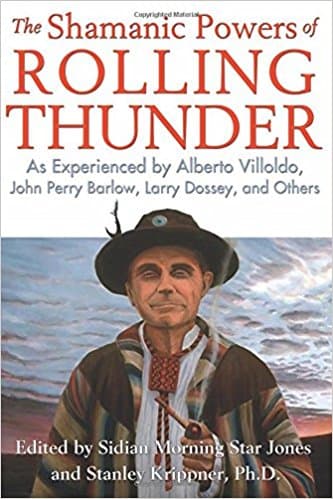
click to purchase
~The 411~:
Election 2016: Politics In The Age Of Polarization
Jim Morrison: A Failed Shaman? by Stanley Krippner, PhD
Overview Of Humanistic Psychology
Online library of papers on consciousness
Russell Targ, 2013 banned TEDTalk on psychic abilities. Targ spent several decades working in a US government program exploring “remote viewing” — an apparent anomalous extended characteristic of the mind. Targ is convinced the effect is real.
We rely on listener support!!
If you value even one of our shows, become a member get exclusive early access to our recordings, extra bonus content for each of our episodes a chance to request guests you want us to bring on and so much more.
Ideas worth returning to
Quotes
Five substantial excerpts from the published transcript, lightly edited for clarity without changing their meaning.
“I was once taught that claiming to dream about the future was a sign of schizophrenia. We now know that dreams about possible future events are perfectly normal, whether or not they later come true. Imagining what may happen is part of the human condition, not by itself evidence of mental illness.”
From the conversation“Shamanic traditions may use symbolic or physical acts to remove what is understood as poison from a person’s body. Rhythmic chanting is also found across many traditions, including Christian, Tibetan, and Buddhist practices. Repeating key words and sacred phrases has been used for millennia to alter attention and support communal healing.”
From the conversation“In an altered state of consciousness, a healer may suggest that a person will recover or that a power animal will help them. The person becomes highly responsive to suggestion, much as in therapeutic hypnosis. The purpose is to connect the individual with an internal capacity for healing—what I call the inner shaman.”
From the conversation“Rolling Thunder taught that human beings are part of nature rather than masters standing outside it. Much of the Western tradition has emphasized controlling nature. His perspective reverses that relationship and asks us to understand health, spirituality, and responsibility through our participation in a larger living system.”
From the conversation“Learning from Rolling Thunder and other Native American leaders can expand the scope of our knowledge. Their teachings can help people live healthier lives, build stronger bonds with other human beings, care for themselves, and develop a more spiritual relationship with nature and the world beyond ordinary perception.”
From the conversation
About the guest
Dr. Stanley Krippner
At 84, Dr. Stanley Krippner, a beloved and prolific teacher, facilitator, and researcher in humanist psychology and its many facets, shows no signs of slowing down. Going into his 85th year on this planet, he’s still keeping pace. And for this, we are thankful. Even if you don’t currently know about parapsychology, altered states, dream telepathy, and the like, your gratitude will be happy delayed reaction. A small bio does him no justice. His vitae are mind-blowingly extensive. Going into his 85th year on this planet, he’s still keeping pace.
Beyond the conversation
Selected work
Official sites, books, research, and institutional pages verified for this guest.
The complete conversation
Transcript
Archival transcript · Published on the canonical episode page
This archival source does not include reliable passage timestamps or consistent speaker attribution. The wording and any labels below are preserved from the original transcript page; no speakers or timing have been inferred.
welcome to the human experience podcast the only podcast designed to fuse your left and right brain hemispheres and feed it the most entertaining and mentally engaging topics on the planet as we approach our ascent please make sure your frontal temporal and occipital lobes are in their full upright position as you take your seat of consciousness relax your senses and allow us to take you on a journey we are the intimate strangers thank you for listening he not
only had that ability with humans but with other animals and even with birds and the eagle was squawking and screaming and they brought the Eagle to Rolling Thunder ruling thunder picked up the Eagle headed it and then the Rolling Thunder said you carry now you can take the picture immediately after the picture was taken that Eagles flew off back to the nest injuries no more healthy eagle and that picture is one of the pictures in our book the shamanic
powers of Rolling Thunder what’s up guys Xavier Crisanta here with the human experience and wow what an interesting episode here with dr. Stanley Crippler where we get into his work with Native Americans and specifically his book called the shamanic powers of Rolling Thunder we get into some really interesting stuff on consciousness dr. Kempner has been in the consciousness field for 40 50 years so years and is very much regarded as a pioneer when it comes to
consciousness studies we talk about dr. Crippen errs work with Alan Watts dr. Gardner’s work with Jerry Garcia of the Grateful Dead so this is one of those once-in-a-lifetime interviews that only happen once in a while so hopefully you guys really enjoy this thank you guys so much for listening the human experience is in session my guest for today is dr.
Stanley krypter dr. Crippen or welcome to hxp welcome to you and thank you so much for inviting me to your show oh yeah the honor is all ours sir dr. Crippen you know Europe very much a pioneer you’ve been in the field of consciousness study for a very very long time for anyone who doesn’t know who you are can you just give us a short kind of about me a short biography of what you do and who you are please I am a professor of psychology at Saybrook
University pounds this is a graduate school which means that I work with students who are doing doctoral research in the area of consciousness studies in other words they’re doing work with dreams with hypnosis with shamanism with parapsychological phenomena and these are all topics that were not part of the university curriculum 50 years ago when I first started out and so when you say that I am a pioneer I didn’t realize it at the time because I have always been
interested in these topics from a scientific perspective I’m in the position where I can actually train and educate students who can do their own research who can continue this particular tradition yes indeed dr. caprera for my own sort of edification how old are you sir I’m 84 so you’ve been doing this for a long time I mean like how much has this field of research changed for you you said that it wasn’t part of the curriculum at first when you first
started sort of lecturing how has this evolved as you’ve kind of witnessed this evolution in civilization and the way that we learn things well let me give you a few example when I was at the University of Wisconsin I took my first psychology course and dreams were only mentioned one time the professor said one of the signs of the person is schizophrenic is if that person dreams in color well I looked at my friends and we were a little bit in shock
because all of us dreamed in color well this was back in the middle 1950s so you can see how much progress has been made since that theory ill-informed remark was made and I’ll give you another example when I was in graduate school I was taking a course in anthropology and one of the professor’s said that shamans traditional healers were probably schizophrenic psychotic mentally unstable and this is one way that the tribe head of controlling their madness
well now we know that this is not true at all that shamans and traditional healers are some of the most stable and most intelligent and most innovative members of their society so back in those days anything that was a little bit deviant was the sign of schizophrenia give you another example when we were talking about schizophrenia in class one of the sure signs of schizophrenia was the people claimed to have dreams about the future well now we
know the dreams about the future whether they come true or not dreams of the future are perfectly normal dream about what they think might be future events and there are really no signs if this is schizophrenic at all that’s just part of the human condition so these are three specific examples that I can give you we’re topics that I was interested in we’re all consigned to symptoms of mental illness unfortunately that is no longer the case so it’s no longer
considered mentally ill if a person is dreaming color certain dreams of schizophrenics are usually very blase they’re usually very simple-minded they’re not extremely interesting or exotic at all the exotic dreams there are signs of creativity not to the schizophrenia hmm okay I want to move into your work with this book that you’ve written called these shamanic powers of Rolling Thunder what led you to this book how did you get to a point
where you felt like you had to put this in a readable format well for those listeners who do not know what a shaman is let me just give you a brief description this is an anthropological term because each tribe has its own name for these special people but shamans are men and women who give information from unusual sources that people in their culture or their tribe don’t have access to they can give information from dreams they can get information from taking
drugs and going into altered states of consciousness they can get information from intuition from hunches and they use this information to help them to heal members of their community so rolling thunder’ is somebody who I met more or less accidentally several decades ago and we became close friends and we saw each other and even did some work together up to the time of his death and now in this book the shamanic powers of Rolling Thunder I’ve worked with rolling
thunders grandson Sid Morningstar and we’ve pulled together a couple of dozen accounts of people whose lives were ducted is in some cases radically changed by their contact with Rolling Thunder as his name implies he was Native American Shoshone Cherokee he drew upon his Native American tradition to do all of the helpful acts of kindness acts of compassion and also militancy standing up for Indian rights over the course of his life
he had a uncanny ability to look at the person and yet some hunch as to what that person’s ailment might be and the best way to heal it he not only had that ability with humans but with other animals and even with birds one of the people who contributed to the book Kerry Garnier was given six months to live by his doctor and so he went off to find Rolling Thunder and the Rolling Thunder let him stay at his camp Kerry was a photographer and Rolling Thunder said I
don’t like my photograph taken so don’t take any photographs until I give you permission so period read and he took the sweat lodge the Bears the herbs the prayers he did all of the things Rolling Thunder told him to do if the other six months he was still alive and he’s still alive today even though the doctor said he of the fatal disease during his last week at rolling thunders camp Terry’s friends had come to pick him up and a little Eagle had fallen out of the
nest and it was in bad shape maybe the wing was broken and the eagle was squawking and screaming and they brought the eagle to Rolling Thunder Rolling Thunder picked up the eagle and petted it and the eagle calm down and then the Rolling Thunder said you carry now you can take the picture and Harry took the picture immediately after the picture was taken that eagle flew off back to the nest injuries no more healthy eagle and that picture is one of
the pictures in our book the shamanic powers of Rolling Thunder as well as the story so dr. Crippen if I could just back you up for a second there was a an experiment that Timothy Leary ran a psilocybin experiment do you recall the aim of the experiment and its effects on you and what is your current take on the usefulness or not of researchers using psilocybin or similar substances in the pursuit of testing parrots psychological
phenomena well this was back in the 1960s when I volunteered for a experiment with psilocybin and again for listeners who don’t know what psilocybin is it’s a mind-altering drug similar to LSD so this was another area in which you might say I was a pioneer because I could see the usefulness of these drugs for psychotherapy for creativity for exploring the drain and its function in altered states of consciousness and then there were several decades in which this
work was illegal unfortunately we lost a lot of time even lost a lot of lives that could have been saved now psilocybin is being used in different parts of the world even in the United States and a few locations to treat people who are mentally ill especially people who have what we call bipolar conditions where they’re very excited and happy one minute and very low and depressed the next one that they go back and forth and psilocybin seems to be
helpful for many of these people so again something that I foresaw back in the 1960s I wasn’t the only one that saw this of course and so now it’s being used and it’s being written up in psychological and psychiatric journals and so finally the what we might say psilocybin time has arrived psilocybin by the way is the chief active ingredient in a mushroom and I actually had a chance to disarm ins in central Mexico who were using the
mushroom in sacred ceremony – was their way of contacting God their way of making contact of the spirits so it sounds like this is a key part in these shamanic rituals and continues to be a key part in these shamanic rituals that correct well not all shamanic rituals use drugs and I have to keep emphasizing this over and over again drugs are only one way the shamans to get information just think of the letter D drugs is one way dreams is another way
dancing is another way drums is another way deprivation going without sleep going without food all of those are ways that shamans change their consciousness alter their attention get inspiration get insight in non ordinary ways that other members of their tribe don’t have the skill or the patience to do hmm very interesting also during these shamanic ceremonies it’s very common to have ritual chanting is that correct oh good heavens chanting is very important
that’s something that I’ve experienced myself because almost all shamans use a great deal of singing and chanting and dancing drumming and music that’s an integral way of getting in touch with shall we say parts of the brain that are pretty far removed from our verbal rational logical discourse puts us of touch with unconscious information in some of the deep sources of our wisdom I’ve been with the Rolling Thunder when we’ve gone into a sweat lodge which is a
little hot usually made out of animal skin and wood and in the sweat lodge there are prayers and there are chants and you sweat all the impurities out of your body sometimes you have visions sometimes you hear voices I’ve done many many sweat lodges with Rolling Thunder with other people and I’ve seen him use sweat lodges as a way of helping to heal people and to symbolically physically or both extry the poisons from their body
that have been holding them back hmm very interesting is very very important in the shamanic tradition it’s also important in other traditions the Christian Orion chance for example which go back centuries the Tibetan chant the Buddhist chants this rhythmic repetition of key words and sacred phrases over and over again has been a part of spiritual traditions for millennia okay so dr.
creepier what’s happening during these chants during this chanting process as a scientist is the brain going into a sort of trance state when it’s tearing this rhythmic kind of repetition of sound you just mentioned the key word rhythmic yes a rhythm is set up and the rhythm can be done by chanting it can be done by drumming it can be done by a mantra meditation any repetition of a phrase or a word or a song shall we say synchronize the brain can pull it
together can put it into a condition which is far away from ordinary discourse ordinary logical thinking chanting and drumming and singing in prayer are all excellent ways of shifting from the logical and rational to the deep unconscious to the imagery to the inner knowledge that exists in all of us but most of us don’t take advantage of yeah yeah I can truly understand that so dr. Crippin let’s say that I was interested in participating in a
ceremony in a shamanic ceremony with a Native American tribe is it set up to heal us was the goal of one of these ceremonies well first of all there are some 500 Native American tribes that have been listed and registered by anthropologists and even by the US government that’s a lot of tribes but before the Europeans came there were closer to a thousand tribes millions of Native Americans died when the Europeans came of diseases and of warfare and
infections it was a massacre even worse than the Holocaust during the Second World War tens of millions of Native Americans died then many of the tribes died too however there are many tribes left and there is now a renaissance there is a new interest in Native Americans Rolling Thunder was part of this he was very militant he thought through length under Rights there’s a whole chapter in our book about the ways that Congress passed
laws to protect Native Americans and we see that played out today in terms of the protests that Native Americans are holding when corporations threatened their tribal lands and their burial grounds so back to Rolling Thunder in his typical eeling ceremonies he used drumming and I’ve been with him when he has it maybe 50 people in a circle and while the drums are going on they chant a typical Native American song which he has taught them and the sick person is
in the middle of the circle the sick person is absorbing the attention and the energy and the music and the rhythm and of course the sick person goes into what we call an altered state of consciousness and then in Rolling Thunder gives a suggestion about that person getting well or gives a suggestion about a power animal or a power bird that is going to be helpful that person is very suggestible it’s the same type of skill that people in the
psychotherapy profession draw upon in the use hypnosis people become very suggestible to outside influence and if you can make a connection with their inner source of healing what I call their inner shaman then they can mobilize all of the bodily defenses all of those wonderful endorphins and neurotransmitters that can begin to restore a person to health well Rolling Thunder didn’t use fanciful terms but he also spoke about contacting one’s inner
healer he often said I don’t heal anybody I try to get my patients to heal themselves that was the essence of his whole procedure and everything he did was to empower the patient to give the patient’s the skill in the insight so they could start on their own route of self-healing okay very interesting so one of the things that you’ve talked about in your previous book was the effect that Rolling Thunder had on the Grateful Dead’s Mickey Hart what was the
experience that happened there if you could if you could tell us that well very kind of you to mention our previous book the voice of Rolling Thunder and we call the book the voice of Rolling Thunder because Mickey Hart the drummer for the Grateful Dead now called deadened company had several dozen hours of rolling thunders lectures tape recorded and we transcribed all of those tape recorded lectures and use those in the book so that people could actually
get rolling thunders own words but Mickey Hart is actually the person who introduced me to Rolling Thunder when I would visit Mickey Hart at his ranch at California he kept saying I’ve got to introduce you to Rolling Thunder you’ve gotta meet Rolling Thunder this Native American medicine man who I know and so finally when I visited his ranch he sent a private plane to Nevada to pick up Rolling Thunder and being Rolling Thunder to California so that we could
meet and let me tell you it was quite a remarkable meeting that’s what our friendship started and for the next several decades I was in close contact with Rolling Thunder visiting him at his ranch but also we did workshops together in Germany and I was able to introduce him to people all over the United States including Doug Boyd who wrote a wonderful book about Rolling Thunder many many decades ago the distill in trim so Rolling Thunder and I have a
long history Mickey Hart and I have an even longer history and Rolling Thunder was the product of the contact I had with Mickey Hart and the Grateful Dead and with Roth music that goes back of course many many years but the again you talk about me being a pioneer back in those days when most of the people my age thought that rock and roll is a passing fancy I said no this appeals to something basic in the human body this is a type of music that goes
deeply into the unconscious this is going to become a major art form and early on identified the Grateful Dead as being in the vanguard because not only did they draw upon rock and roll but they told they use Soul Country and Western jazz and even some Native American music from both North and South America in their music mm-hmm yeah so dr. Cabrera I’m really curious to know you know how did this persona impact your life in the greatest way I mean was
there something that you learned from Rolling Thunder that that’s stuck with you through the years yes I learned many things of from Rolling Thunder and one thing that is very important ruling Thunder was very much of an activist back in the 1960s and 1970s but he never resorted to violence all of his methods are very nonviolent in the tradition of Martin Luther King and Mahatma Gandhi and young our book the shamanic powers of Rolling Thunder I
give an example of that corporations were illegally tearing up the pine nut trees and taking over the land this was against the law but the Indians didn’t have good lawyers they didn’t know how to fight this takeover of their land and many of growing thunders young Draves said well we’ll get our rifles and we’ll just start a rebellion against them and the Rolling Thunder said no we do not resort to violence first of all let’s go
and get a camera and do a video showing the way that the land is being torn up because it had bulldozers tearing up these pine nut trees and pine nuts are a cheap source of protein for the Native Americans they’re very very important so they got a photograph and then at night they wasn’t they put sand in the gas tanks the bulldozers so the bulldozers are out of commission for several days and in the meantime somebody through the
Washington DC and showed the video to politicians said to say most of the politicians were not interested however senator Ted Kennedy took a great interest in this and he went to President Nixon Kennedy of course is a Democrat Nixon was a Republican but they both agreed that this this had to stop and Nixon issued a presidential order that stopped the exploitation of American lands Nixon was obviously guilty of many many serious breaches of
the law but when it came to Native Americans he did the right thing he had the Native American athletic coach and that contact remained with him he probably did more for Native Americans and then the other recent American president so anyway that’s the example of whether stayed with me in terms of using one’s intelligence to become active rather than to resort to anything that might be violent now a completely different aspect in terms of what I
learned from Rolling Thunder is to find the source of healing within yourself and the natural environment and not become too dependent upon pharmaceutical drugs you can do a great deal of diet you can do a great deal with exercise with prayer with meditation with thinking positive thoughts you could use more natural ways of recovering from an illness and keeping healthy by becoming shall we say linked with nature because we’re all a very important part of
nature the Western tradition has been for people to control nature Rolling Thunder felt that we were a part of nature and that’s a another learning that I’ve had from him over the years so dr. Crippin I mean because it seems like Western civilization is so behind on so many things how can we learn from these other cultures that seem to be so far ahead in a regard to consciousness and what can we learn from these other cultures that
the West hasn’t picked up yet well of course as I mentioned earlier I teach the Saybrook University and it’s a Brook University emphasize humanistic and transpersonal psychology and these are approaches to psychology that emphasize the link between people and the natural environment not that there’s anything wrong with other psychological approaches but they don’t pay as much attention to the connection with nature and also with cross-cultural traditions
as humanistic and transpersonal psychology do there’s a lot that we can learn from other cultures there’s a lot that we can learn from being in nature and Alan Watts another one of my great friends and teachers made the point that the earth gives birth to people just like an apple tree gives birth to apples well the earth peoples were part of the earth Rolling Thunder realized this and as a matter of fact one of my students arranged for Rolling Thunder Alan Watts
and myself to do a week of joint lectures and seminars at the University of New Mexico so there are a lot of wise people today who are teaching us to learn from other traditions not that there’s anything wrong with our tradition there’s a lot that’s right with it and not that other traditions are always perfect they are not they make many many mistakes one has to think critically one has to evaluate one has to use common sense but by broadening
the scope of our knowledge in learning from what Rolling Thunder and other Native American leaders have been teaching us we can all live better lives and healthier lives and we can find ways to bond more closely with other humans and also to take better care of ourselves and also to form spiritual bonds with nature and the world beyond
[Music]what’s up guys you have been listening to our interview with dr. Stanley encryptor if you would like to hear the rest of this interview get to our membership site the human XP home slash members become a member of what we’re doing it helps us continue what we’re doing here and scale the show up so if you enjoy what we’re doing and help and support it and if you want to hear more about dr. Crippen report with con watts his work with Jerry Garcia you’re
definitely I don’t want to rush this interview so the human xpcom slash members thank you guys so much
[Music]why do I listen to the human experience podcast podcast the most easy and most perhaps cop-out answer I can give a right off the bat is that my life is my own human experience so already the title is relatable so then you start listening or I start listening and I’m hearing about things that aren’t really talked about and subjects that don’t quite come up because they’re considered what’s the word a boob perhaps especially from where I’m from I’m from
Texas and nothing not to hate on Texas but I am surrounded by a lot of people who are how do I say not everyone is as open-minded any podcast that encourages you to be open-minded in my opinion is a positive thing the other thing I really enjoy is that no matter what the subject matter is the conversation is always captivating to listen to I try to find podcasts that are very easy to understand and easy to listen to but not so easy that it’s like they’re dumbing
it down for me and I think this podcast was a very fine balance of that the the interviews in the subject matter are stimulating and there’s things I didn’t really know about so I find myself a learning an immense amount but it’s not straining it’s not draining it doesn’t make me exhaust it and to be honest you know when I am working all today and I have to spend you know what two hours a day in traffic maybe three I don’t want
to be drained even more by something that I’m choosing to listen to I can be passive and just listen to these two people connecting and maybe disconnecting sometimes but at the end of it all it’s a positive experience it’s stimulating and my ears enjoy it so really what I’m trying to say is that there’s no reason not to listen to this podcast so why not just listen and if you’re a human and you have experiences and you want to have more transcendent
experiences I think the human experience is giving the tools that people could need if you’re at the human experience I just want you to know you guys are awesome you rock and keep doing what you’re doing you know this is just a testament to our commitment to bring you guys life-changing stuff that will affect your life in a positive way and you know my my deepest most grateful heart melting thanks to Hannelore who submitted this for us and wow what a
huge huge testament to everything we’re doing here so hopefully you guys enjoyed this little blurb her telling us why she listens to HSB and it motivates you to become a member of what we’re doing thanks guys

Dean Radin, Ph.D. on Double Slit Experiments, Consciousness & Parapsychology
Dean Radin, PhD, is the chief scientist at the Institute of Noetic Sciences (IONS), and has held reign there since 2001. After earning his MS in electrical engineering, and his Ph.D. in psychology in 1979 at the University of Illinois, Urbana-Champaign, he’s left a cosmic trail of documented studies in the human consciousness continuum. Radin has authored or

Nathaniel Gillis – Good Vs. Evil, Demonology, Parapsychology and much much more!
Nathaniel Gillis is a religious demonologist and author. After living in a haunted house, Nathaniel spent 20 years researching what it was he encountered. Nathaniel has sought to redefine the nature of haunting phenomena, ghosts and high strangeness. He’s often quoted for his concept of the demonic: "The reason they are playing by different rules is that the

Carlos Tanner – Healing Trauma/PTSD – Plant Medicine, Ayahuasca
Carlos Tanner is the Director of the Ayahuasca Foundation, a non-profit organization based in Iquitos, Peru In 2017, Carlos opened the Risobo Ayahuasca Research Center, a research and healing center which will study the effects of ayahuasca and plant medicine on such issues as childhood trauma and chronic pain, PTSD, abuse and many others. In this conversati

Plant Medicine, Ayahuasca, Healing Trauma/PTSD From Shock to Awe w/ Matt Kahl
Matt is a US Military Combat veteran, PTSD survivor, and Founder Matt has been on the front lines of drug policy advocacy and reform in regards to plant medicine and using unorthodox treatment methods to treat PTSD and trauma since 2013. Matt served in the hundredandfirst Airborne Division in Afghanistan where an accident sent him home injured, traumatized a

James W. Jesso – Psilocybin, Plant Medicine, Deconstructing the Ego & Surrender
Modern-day shaman, James W. Jesso, embraces his difficult mission in life as a conscious explorer, seeking, learning, growing, and educating others on what it’s like on the other side. His method for self-understanding and individuation is a deeply personal and profound one. It’s unconventional and not quite mainstream — yet, but it is gaining validity in th

Robert Bruce – PPSD (Part 2)
This is the final episode in the two part series we did with Robert Bruce, regarding his work on Practical Psychic Self Defense. We get into the nitty gritty of various psychic attacks, demonic possession and all things paranormal. We also got into some guest questions near the end on some astral phenomena. Robert Bruce […]
Independent conversations
Help make the next one possible.
Membership sustains ambitious, unhurried interviews and keeps the complete archive open to curious listeners everywhere.
Become a member